
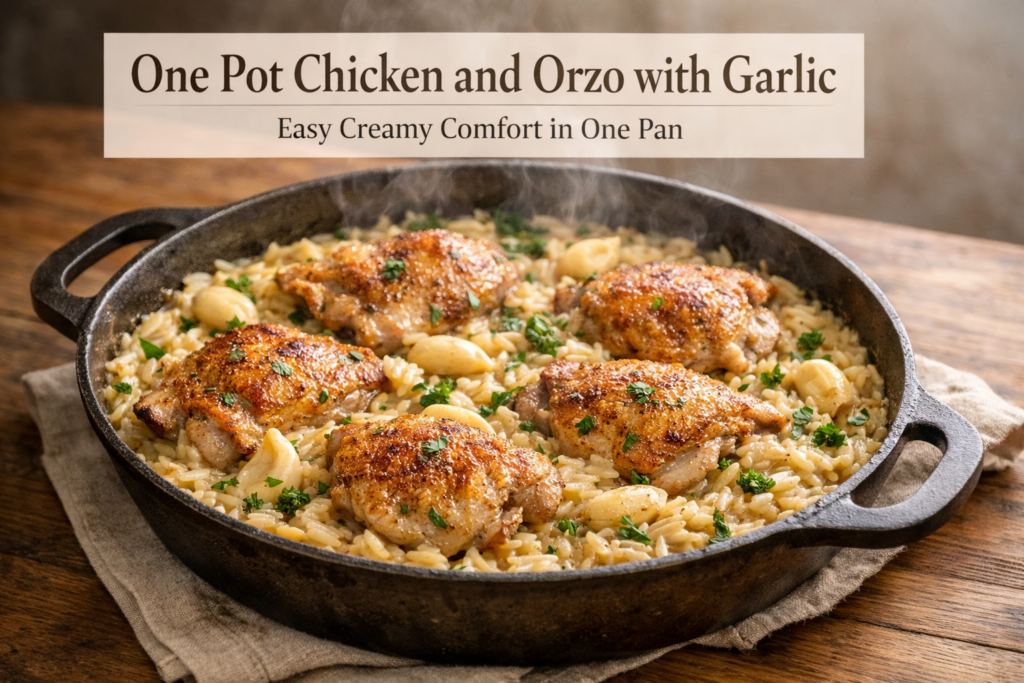
You want a dinner that feels comforting without creating a sink full of dishes. This one pot chicken and orzo with garlic recipe delivers a complete meal cooked together in a single pan, where tender chicken, garlic, and orzo absorb flavor as they cook side by side. It is a simple one-pan dish that combines seared chicken, garlic, orzo pasta, and broth into a balanced, weeknight-ready meal.
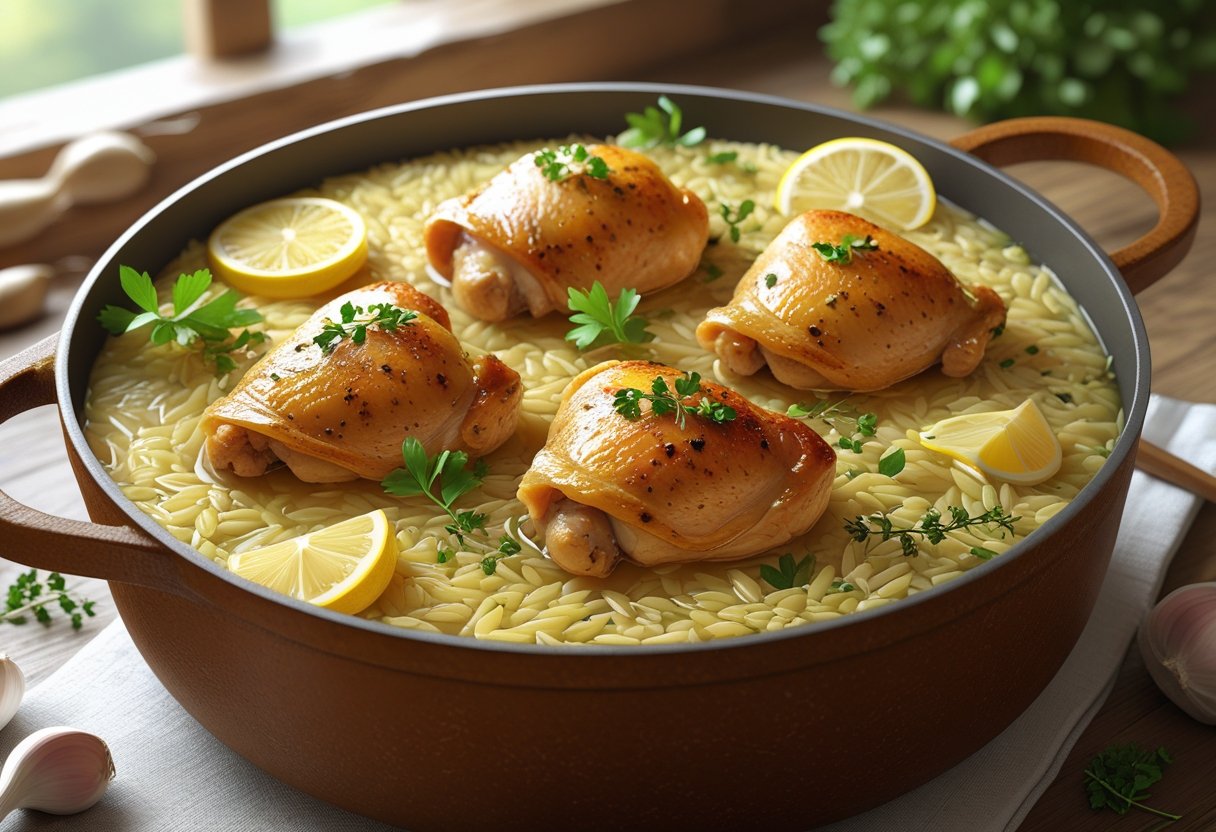
The appeal comes from how everything builds flavor in the same pot. The chicken cooks until golden, the garlic softens without burning, and the orzo turns rich as it absorbs the broth. The method keeps the process approachable while still producing a dish that feels thoughtful and satisfying.
As the recipe unfolds, it focuses on smart ingredient choices, clear cooking steps, and small adjustments that improve results. It also covers practical ways to serve, store, and reuse leftovers, making the dish work just as well for meal prep as it does for dinner tonight.
What Makes One Pot Chicken and Orzo with Garlic Special?
This dish stands out because it balances efficiency, flavor, and texture in a single pan. It delivers a rich garlic butter profile while keeping preparation and cleanup simple, which matters on busy nights.
Why One Pot Cooking Works
One pot cooking succeeds because it layers flavor without adding steps. In one pot chicken and orzo with garlic, the cook browns the chicken first, then builds the sauce and pasta in the same pan, keeping every browned bit in play.
That method allows the orzo to absorb seasoned broth and rendered chicken juices as it cooks. Recipes like this one-pot chicken and orzo dinner show how quickly the pasta softens while pulling in garlic and fat.
It also controls texture. The chicken finishes cooking gently while resting on the orzo, which helps prevent dryness.
From a practical view, one pot cooking reduces dishes, shortens prep time, and keeps the process predictable. Those details make it repeatable for weeknight meals.
Comfort Food Qualities
This dish fits squarely into comfort food because of its warmth, softness, and savory depth. Orzo cooks into a tender, risotto-like texture that feels filling without being heavy.
Chicken provides protein and structure, while the broth-based base keeps the dish cohesive. Versions such as this garlic butter chicken and orzo recipe lean into that balance by keeping the sauce creamy but not thick.
Comfort food works best when flavors feel familiar. Garlic, butter, chicken, and pasta meet that expectation without relying on spice or acidity.
The dish also reheats well, which matters for leftovers. The orzo continues to hold flavor, and a small splash of broth restores moisture.
Garlic and Butter Flavor Impact
Garlic and butter define the character of garlic butter chicken and orzo. Butter carries flavor across the dish, coating the orzo and helping garlic release aroma as it cooks.
When garlic toasts briefly before liquid is added, it develops depth without bitterness. Many cooks follow this approach in recipes like garlic parmesan chicken orzo, where timing matters more than quantity.
Butter also softens the edges of garlic’s sharpness. That pairing keeps the dish savory instead of harsh.
Together, garlic butter chicken elements create a consistent flavor from the first bite to the last. The seasoning feels intentional, not layered on at the end.
Ingredients You’ll Need for the Best Chicken and Orzo
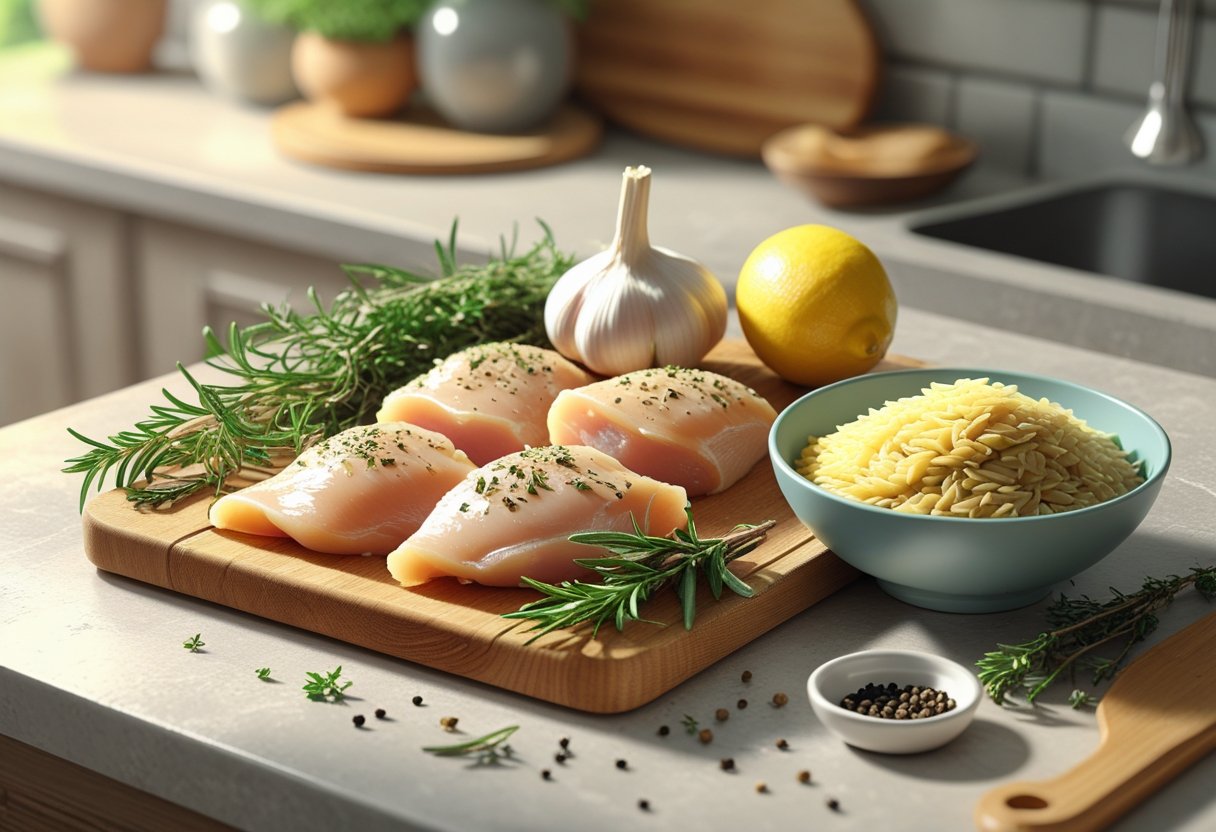
Great chicken and orzo depends on a short list of well-chosen ingredients. The chicken sets the base flavor, the orzo controls texture, and garlic butter brings everything together into a cohesive, savory dish.
Choosing the Right Chicken
He gets the best results from bone-in, skin-on chicken thighs. They stay juicy during stovetop cooking and release fat that flavors the toasted orzo. Dark meat also tolerates longer simmering without drying out, which matters in one-pot chicken orzo recipes.
Boneless, skinless thighs work if speed matters, but they need less browning time. Chicken breasts can be used, though they benefit from cutting into large pieces to prevent overcooking. Season the chicken simply with salt and pepper so it supports the garlic butter chicken and orzo rather than competing with it.
For readers who want a proven approach, this one pot chicken and orzo recipe with bone-in thighs shows how well dark meat performs in a single skillet.
All About Orzo Pasta
Orzo looks like rice, but it cooks and tastes like pasta. It absorbs liquid quickly, making it ideal for chicken and orzo cooked in one pan. Toasted orzo matters here; browning it in fat before adding liquid adds nutty flavor and improves texture.
Use standard durum wheat orzo rather than whole wheat, which can turn dense in skillet meals. Measure carefully, since extra orzo can pull in too much broth and leave the dish dry. When cooked properly, orzo releases starch into the pan, creating a naturally creamy orzo texture without cream.
This technique appears across many chicken orzo variations, including this classic one pot chicken and orzo skillet method.
Building Garlic Butter Flavors
Garlic butter defines the personality of this dish. He should use fresh garlic, not jarred, and add it after the orzo begins to toast to avoid bitterness. Butter adds richness, while olive oil raises the smoke point and keeps flavors balanced.
A simple ratio works well:
| Ingredient | Purpose |
|---|---|
| Butter | Richness and mouthfeel |
| Olive oil | Heat stability |
| Fresh garlic | Sharp, savory aroma |
Chicken stock, not water, finishes the garlic butter chicken and orzo. It deepens flavor and helps create a cohesive sauce as the orzo cooks.
Step-By-Step: How to Make One Pot Chicken and Orzo with Garlic
This process focuses on building flavor in layers while keeping everything in a single pan. The cook browns the chicken, develops nutty notes in the pasta, and finishes with a controlled simmer that creates a cohesive one pot meal.
Searing Juicy Chicken Thighs
They start with seared chicken thighs because dark meat stays tender during simmering. Patting the thighs dry helps them brown instead of steam. A hot pan with a thin layer of oil creates a golden crust in about 4–5 minutes per side.
Season simply with salt, pepper, and garlic so the meat stays versatile. Avoid moving the chicken too early; contact with the pan drives browning. Once done, the thighs should release easily and show deep color.
This step mirrors the technique used in this one pot garlic butter chicken with orzo, where strong browning sets the base flavor. Remove the chicken and keep it nearby so the pan stays hot.
Key cues
- Medium-high heat
- No overcrowding
- Visible browning before flipping
Toasting the Orzo for Depth
They toast the orzo directly in the same pan to capture the rendered fat and browned bits. Stir constantly for 1–2 minutes until the pasta turns lightly golden and smells nutty. This creates toasted orzo with more structure and flavor.
Garlic goes in at the end of toasting. Adding it earlier risks burning due to direct heat. The cook scrapes the pan bottom to loosen fond, which dissolves into the liquid later.
This approach aligns with methods in this one-pot chicken and orzo recipe, where toasting prevents mushy pasta.
| Step | Why it matters |
|---|---|
| Toast dry orzo | Adds depth and firmness |
| Add garlic last | Prevents bitterness |
Simmering and Bringing It All Together
They return the chicken to the pan and add broth until the orzo sits just below the surface. The liquid should barely cover the pasta to avoid dilution. A gentle simmer, not a boil, cooks everything evenly.
Covering the pan traps steam and finishes the juicy chicken thighs without drying them out. Stir once or twice so the orzo cooks evenly and does not stick. Most pans finish in 8–10 minutes.
They check doneness by texture, not time. The orzo should feel tender but intact, and the sauce should cling lightly rather than pool. Parmesan or herbs finish the dish while it rests briefly off heat.
Tips for Success and Tasty Variations
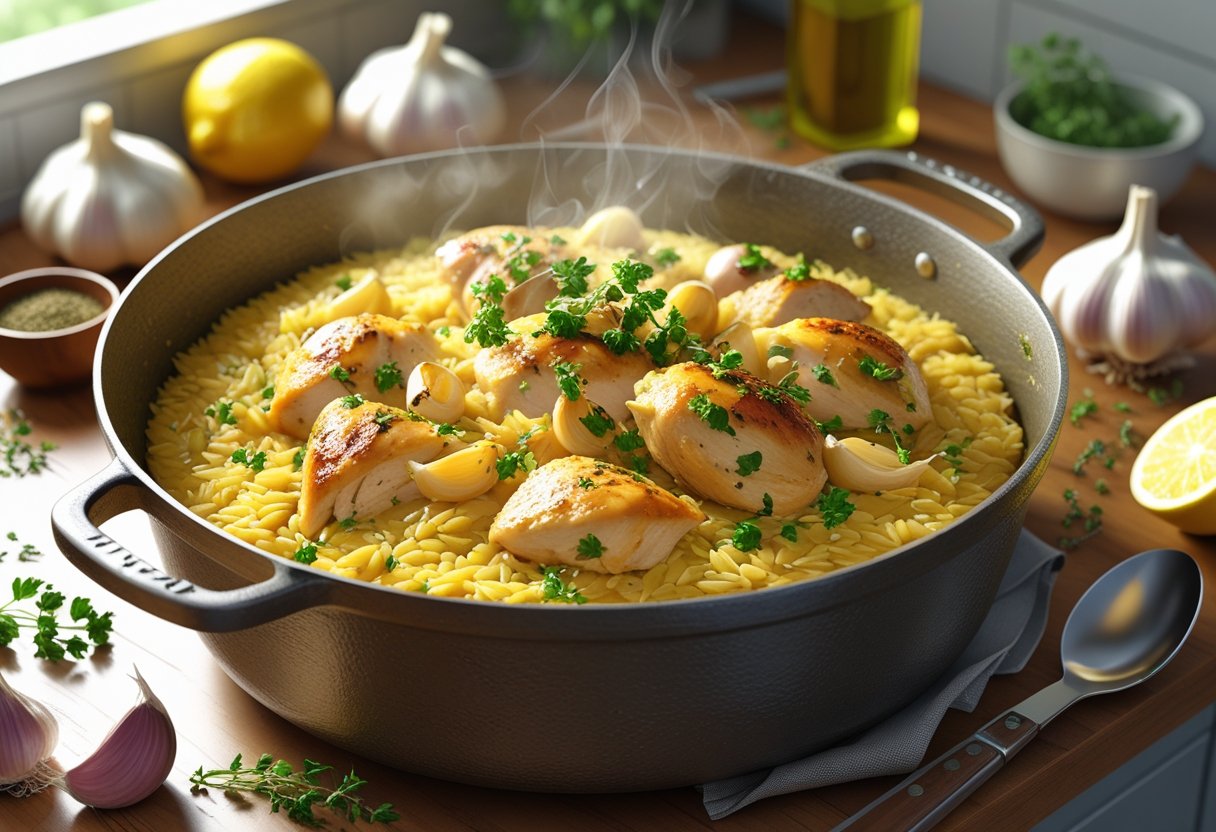
Small adjustments make a big difference in a one pot chicken garlic and orzo recipe. Texture control, timing, and ingredient swaps help shape everything from a creamy chicken orzo to lighter or spicier versions without complicating the cooking process.
Creamy Chicken Orzo Twists
For a creamy chicken orzo, focus on liquid balance and finishing ingredients. They often stir in heavy cream, half-and-half, or cream cheese during the final five minutes, once the orzo softens and releases its starch.
Let the dish rest off heat for two minutes before serving. This pause thickens the sauce and keeps the orzo from turning soupy.
A small knob of butter added at the end boosts richness and creates a buttery orzo texture. Many home cooks use this same technique in classic one-pot versions like the garlic butter chicken orzo skillet, where starch and fat work together for natural creaminess.
Vegetable Add-Ins and Nutritional Boosts
Vegetables add structure, color, and balance to a chicken orzo recipe. Timing matters more than quantity, since orzo cooks quickly and absorbs liquid fast.
Use this guide to avoid overcooking:
| Vegetable | When to Add | Result |
|---|---|---|
| Spinach | Last 2 minutes | Soft, bright |
| Peas | Last 3–4 minutes | Tender, sweet |
| Broccoli florets | With stock | Firm-tender |
For a broccoli cheddar orzo, they often fold in finely chopped broccoli and shredded cheddar after cooking. The residual heat melts the cheese while keeping the vegetables intact.
Garlic Parmesan Chicken Variations
Garlic parmesan chicken relies on layered seasoning rather than more ingredients. They usually season the chicken aggressively at the start and finish with freshly grated Parmesan, not pre-shredded cheese.
Add Parmesan only after removing the pan from heat. This prevents clumping and keeps the sauce smooth.
Roasted garlic or garlic confit works well for cooks who want deeper flavor without sharpness. It blends smoothly into the orzo and pairs well with parsley or thyme, reinforcing the savory profile common in garlic parmesan chicken dishes.
Making It Dairy-Free, Gluten-Free, or Spicy
Diet-friendly swaps work best when they respect orzo’s cooking behavior. For dairy-free versions, they replace butter with olive oil and finish with nutritional yeast for umami.
For gluten-free cooking, they often substitute orzo with rice-shaped gluten-free pasta or short-grain rice. Extra liquid and frequent stirring prevent sticking.
To add heat, they bloom crushed red pepper or chili paste in oil before searing the chicken. This method distributes spice evenly without overpowering the garlic or chicken flavor.
Serving Suggestions and Pairings
This dish balances rich garlic butter flavors with tender chicken and soft orzo. Smart pairings add contrast, freshness, and texture without turning an easy one pot chicken orzo into a complicated meal.
Perfect Sides to Complement Chicken and Orzo
Light, crisp sides work best with a chicken and orzo recipe that already feels hearty. Simple vegetables keep the focus on the main dish while adding balance.
Good side options include:
- Roasted broccoli or asparagus with olive oil and lemon
- Mixed green salad with cucumbers and a light vinaigrette
- Steamed green beans finished with a pinch of salt and butter
Warm bread also fits naturally. Crusty bread or soft dinner rolls help scoop up garlicky orzo without overpowering it.
For a Mediterranean-style plate, serve this dish alongside tomatoes and olives. Dishes inspired by Mediterranean chicken and orzo cooking often lean on fresh vegetables to balance richer flavors.
Fresh Herb and Cheese Toppers
Fresh toppings sharpen the flavors and improve texture with minimal effort. They also let each person adjust the dish to taste at the table.
Popular finishing touches:
- Fresh parsley for clean, mild freshness
- Basil for a softer, slightly sweet note
- Grated Parmesan for saltiness and depth
A small amount goes a long way. Finely grated cheese melts quickly into hot orzo, while chopped herbs stay bright and aromatic.
Garlic-forward versions, like those seen in one pot garlic butter chicken and orzo recipes, benefit most from herbs added just before serving. This timing keeps flavors clear and prevents bitterness.
Ingredients
Method
- Season the ChickenPat chicken thighs dry and season generously with salt and pepper.
- Sear the ChickenHeat olive oil in a large skillet or Dutch oven over medium-high heat. Add chicken skin-side down and sear for 4–5 minutes per side until golden. Remove and set aside.
- Toast the OrzoReduce heat to medium. Add butter to the pan, then stir in orzo. Toast for 1–2 minutes, stirring constantly, until lightly golden.
- Add GarlicStir in minced garlic and cook for 30 seconds, just until fragrant.
- SimmerPour in chicken broth and scrape up any browned bits. Nestle chicken back into the pan, skin-side up. Bring to a gentle simmer.
- Cook Until TenderCover and cook for 8–10 minutes, stirring once or twice, until orzo is tender and chicken is cooked through.
- Finish and ServeRemove from heat. Stir in Parmesan if using and let rest for 2 minutes. Garnish with fresh herbs and serve warm.
Notes
Notes
- Add extra broth as needed if the orzo thickens too quickly.
- For creamier orzo, stir in a splash of cream or half-and-half at the end.
- Store leftovers refrigerated for up to 3 days.
Storing, Reheating, and Meal Prep Ideas
This dish keeps well and adapts easily to busy schedules. Proper storage, gentle reheating, and simple prep steps help maintain the creamy texture of the orzo and the tenderness of the chicken.
How to Store Leftovers
Encourage readers to cool the chicken garlic orzo fully before storing. Transfer it to airtight containers to limit moisture loss and fridge odors.
Storage guidelines
- Refrigerator: Up to 3 days at or below 40°F
- Freezer: Up to 2 months in freezer-safe containers
They should expect the orzo to absorb liquid as it rests. That change is normal and does not affect safety or flavor.
For freezing, portion the dish into single servings. Smaller portions thaw faster and reheat more evenly. If the recipe includes Parmesan, note that the texture may soften after freezing, so adding fresh cheese later improves results.
Reheating for Best Texture
Reheat slowly to protect the orzo from turning mushy and the chicken from drying out. The stovetop works best for texture control, but the microwave fits busy days.
Stovetop method
- Add leftovers to a skillet or saucepan.
- Stir in 1–3 tablespoons of chicken broth or water per cup.
- Warm over low heat, stirring often.
Microwave method
- Cover loosely.
- Heat in 30-second intervals.
- Stir between intervals to redistribute moisture.
Finish with a small pat of butter or a drizzle of olive oil to restore richness.
Making Chicken Garlic Orzo Ahead
This recipe suits meal prep with minimal quality loss. They can prep key components up to 24 hours in advance.
Make-ahead steps
- Sear the chicken and refrigerate it separately.
- Mince garlic and store it in a sealed container.
- Measure orzo and broth ahead to speed cooking.
For best results, cook the orzo fresh on serving day. If fully cooking ahead, slightly undercook the orzo so it stays firm when reheated. Many home cooks follow this approach with one-pot chicken and orzo dishes similar to this garlic butter chicken with orzo recipe, which reheats cleanly for lunches and dinners.