
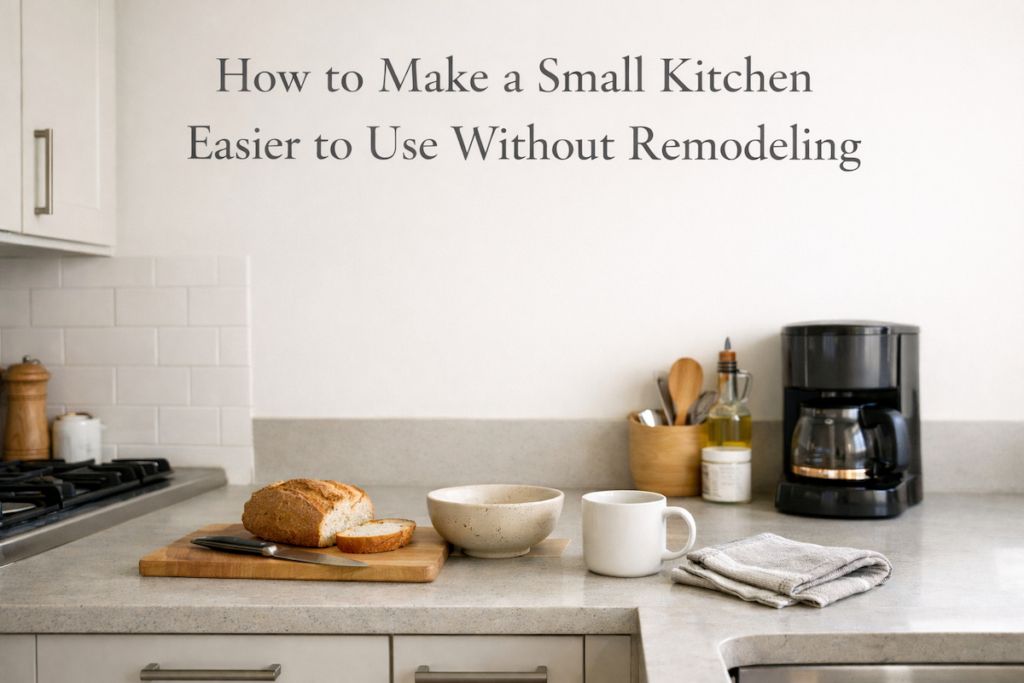
A small kitchen can feel limiting, frustrating, or constantly cluttered—even when it’s clean. For many homeowners, the issue isn’t the size itself but how the space functions day to day. Counter space disappears quickly, storage feels awkward, and cooking becomes more about managing the room than enjoying the process.
The good news is that you can make a small kitchen without remodeling work better without tearing out cabinets, moving walls, or spending renovation-level money. Functionality often improves most through layout tweaks, smarter storage, and realistic changes based on how you actually use the space.
This guide is designed to help you think practically. Not aspirational kitchens. Not “rip everything out.” Just real, achievable ways to make a small kitchen easier to use—based on daily habits, not design trends.

Rethink How You Use the Space You Already Have
Before buying organizers or new appliances, the most important step is understanding how your kitchen is actually used. Many small kitchens struggle not because of size, but because the space is working against the homeowner’s routines.
Identify Your High-Friction Areas
Pay attention to where things feel difficult during everyday tasks:
Do you constantly shuffle items to make space to prep food?
Is your sink area crowded with items that don’t belong there?
Do you avoid certain cabinets because they’re hard to access?
These friction points often signal that storage and layout no longer match how the kitchen is used today.
Match Storage to Daily Habits
In a small kitchen, storage needs to be hyper-practical. Items used daily should be the easiest to reach. Items used occasionally can live higher, lower, or farther away.
For example:
Keep cooking utensils near the stove, not in a distant drawer.
Store plates and bowls close to the dishwasher or sink.
Move rarely used appliances out of prime cabinet space.
This shift alone can make a small kitchen easier to use without changing anything structurally.
Improve Counter Space Without Adding Counters
Counter space is often the biggest pain point in a small kitchen. While you can’t magically add square footage, you can reduce what lives on the counters—and create flexible surfaces when needed.
Remove Permanent Counter Clutter
Small kitchens suffer when counters become permanent storage. Common offenders include:
Knife blocks
Appliance bases
Decorative items that don’t serve a purpose
Relocating even one or two items can free up valuable prep space.
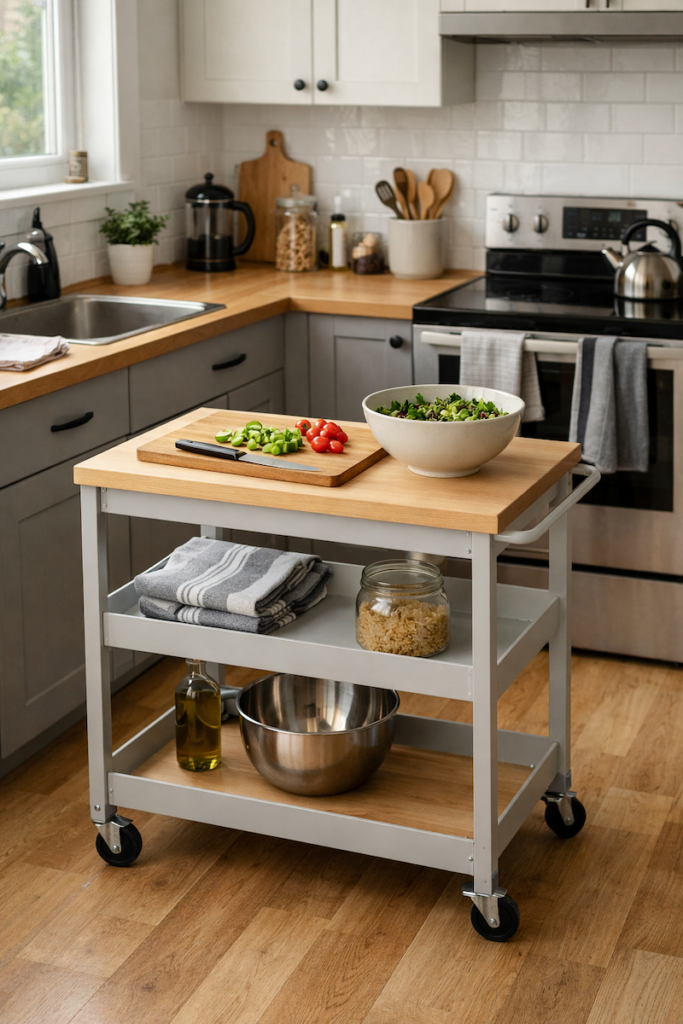
Use Temporary or Fold-Down Surfaces
Instead of adding counters, think in terms of expandable workspace:
Over-the-sink cutting boards
Rolling carts that tuck away
Fold-down wall-mounted tables
These options provide workspace when needed and disappear when they’re not.
Rethink Appliance Placement
Appliances don’t always need to live on the counter. Consider:
Storing slow cookers or air fryers in cabinets
Using pull-out shelves for heavier items
Rotating appliances seasonally
This approach is especially helpful when trying to manage a small kitchen without remodeling while still cooking regularly
Make Cabinets Work Harder (Without Replacing Them)
Cabinet replacement is expensive and often unnecessary. Most small kitchens benefit more from improving how cabinets are used rather than swapping them out.
Add Internal Organization
Cabinets often waste vertical and horizontal space. Simple additions can dramatically increase usability:
Pull-out shelves
Stackable racks
Door-mounted organizers
These allow you to access items without unloading half the cabinet.
Address Deep or Corner Cabinets
Deep cabinets are common problem areas. Items get lost or forgotten, making them inefficient storage zones.
Better options include:
Pull-out bins
Lazy Susans
Grouping items by category instead of size
These changes reduce the need to bend, dig, or reorganize constantly.
Don’t Overcrowd Cabinets
Overfilled cabinets slow you down. If something is difficult to put away, it probably doesn’t belong there.
A small kitchen functions best when cabinets are:
Intentionally curated
Easy to open and close
Organized by task, not category alone
Use Vertical Space Strategically
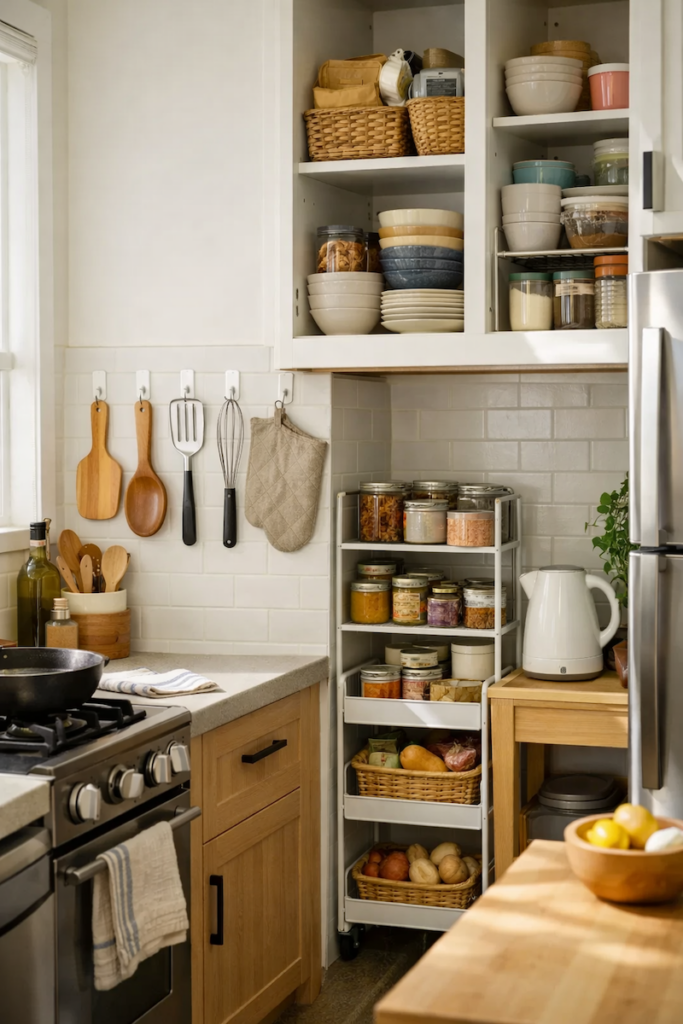
Vertical space is often underused in small kitchens, especially above cabinets, on walls, or inside doors.
Open Shelving (Used Carefully)
Open shelves can work in small kitchens—but only when used thoughtfully. They’re best for:
Frequently used dishes
Neutral, cohesive items
Lightweight storage
Avoid using open shelving for clutter-prone items or mismatched containers, which can make the space feel busier.
Wall-Mounted Storage Options
Consider using walls for:
Magnetic
knife stripsHanging rails for utensils
Pegboards for flexible storage
These options free up drawers and counters without feeling permanent.
Inside-the-Door Storage
Cabinet and pantry doors offer hidden storage potential:
Spice racks
Cleaning supplies
Wraps and foils
This is one of the easiest small kitchen organization ideas that requires minimal effort and no remodeling.
-
 $109.99View on Amazon
A multi-cooker can replace several single-use appliances, which is often more valuable than raw cooking speed in a small kitchen.
We earn a commission if you make a purchase, at no additional cost to you.
06/14/2026 05:01 pm GMT -
 $219.99View on Amazon
Combination air fryers that also function as toaster ovens can simplify small kitchens by consolidating daily cooking tasks into one appliance, reducing both counter and cabinet clutter.
We earn a commission if you make a purchase, at no additional cost to you.
06/14/2026 03:03 am GMT -
 $25.99View on Amazon
In small kitchens, under-sink storage is often wasted space. A simple pull-out organizer can make cleaning supplies easier to access without adding visual clutter elsewhere.
We earn a commission if you make a purchase, at no additional cost to you.
06/14/2026 03:22 am GMT

Choose Appliances That Fit the Space (Not the Other Way Around)
Large appliances can overwhelm a small kitchen, even if they’re only used occasionally. Choosing the right size and function matters more than having every feature available.
Right-Size Your Appliances
Instead of standard-sized everything, consider:
Compact dishwashers
Counter-depth refrigerators
Slim trash and recycling bins
Smaller appliances often perform just as well while taking up less space.
Multi-Function Appliances Matter More in Small Kitchens
When space is limited, versatility matters. Appliances that serve multiple purposes reduce clutter and storage demands.
Below is a practical comparison of common small-kitchen-friendly appliances.
| Appliance Type | Footprint | Functions | Ease of Storage | Best For |
|---|---|---|---|---|
| Slow Cooker | Medium | Slow cook, warm | Bulky | Set-it-and-forget-it meals |
| Multi-Cooker | Medium | Pressure cook, sauté, slow cook | Bulky | Replacing multiple appliances |
| Air Fryer | Medium–Large | Air fry, roast | Bulky | Quick cooking |
| Toaster Oven | Medium | Bake, toast, reheat | Counter-heavy | Daily use cooking |
Before buying anything new, consider:
How often you’ll actually use it
Whether it replaces another appliance
Where it will live when not in use
This helps avoid overcrowding and supports the goal to make a small kitchen easier to use.
Improve Lighting to Make the Kitchen Feel Larger
Lighting doesn’t change the physical size of a kitchen, but it significantly affects how usable the space feels.
Layer Your Lighting
Small kitchens benefit from multiple light sources:
Overhead lighting for general visibility
Under-cabinet lighting for task areas
Accent lighting for depth
Good lighting reduces shadows, improves safety, and makes cooking more enjoyable.
Use Light to Reduce Visual Clutter
Bright, even lighting makes a small kitchen feel cleaner and more open. It also highlights organization improvements you’ve already made.
Simple upgrades like LED strips or plug-in lights can be installed without electrical work.
Simplify What Lives in the Kitchen
Sometimes the best way to improve a small kitchen is to remove things rather than add them.
Declutter with Function in Mind
Ask yourself:
Do I use this monthly?
Does this item earn its space?
Is there a better place for it outside the kitchen?
Serving dishes, specialty gadgets, and bulk items can often be stored elsewhere.
Relocate Non-Kitchen Items
Many small kitchens store things that don’t belong there:
Office supplies
Pet food accessories
Seasonal items
Removing these instantly improves function without any investment.
Create Zones That Support Real Life
Zoning helps small kitchens feel more intentional and less chaotic.
Common Kitchen Zones
Even small kitchens benefit from clear zones:
Prep zone
Cooking zone
Cleaning zone
Storage zone
Items should live where they’re used. This minimizes movement and frustration.
Adjust Zones as Life Changes
What worked five years ago may not work now. Changes in cooking habits, household size, or routines often require layout adjustments—even without remodeling.
Neutral Affiliate Disclosure
Some product types mentioned in this article may be linked through affiliate partnerships. These recommendations are based on practical use and space considerations, not promotions. Product availability, features, and suitability vary by household and should be evaluated based on your own kitchen needs.
Before You Spend Money, Test Small Changes
One of the advantages of improving a small kitchen without remodeling is flexibility. You can test ideas before committing.
Try Temporary Solutions First
Examples include:
Command hooks before drilling
Rolling carts before permanent islands
Shelf risers before full cabinet organizers
Living with a change for a few weeks often reveals whether it truly improves daily use.
Avoid “Organization for Organization’s Sake”
Not every system works in every kitchen. Focus on:
Ease of access
Fewer steps during tasks
Reduced visual noise
Function should always come before aesthetics.
Conclusion: A Small Kitchen Can Work Better Without Remodeling
A small kitchen doesn’t need to be bigger to be better. With thoughtful adjustments, it’s possible to make a small kitchen without remodeling easier to use, calmer to work in, and better suited to real life.
The most effective changes usually involve:
Rethinking how space is used
Reducing unnecessary items
Choosing storage and appliances intentionally
Supporting daily routines rather than fighting them
Instead of focusing on what your kitchen lacks, focus on how it functions. Small, practical changes often deliver the biggest improvements—and they’re far easier to live with than a full renovation.