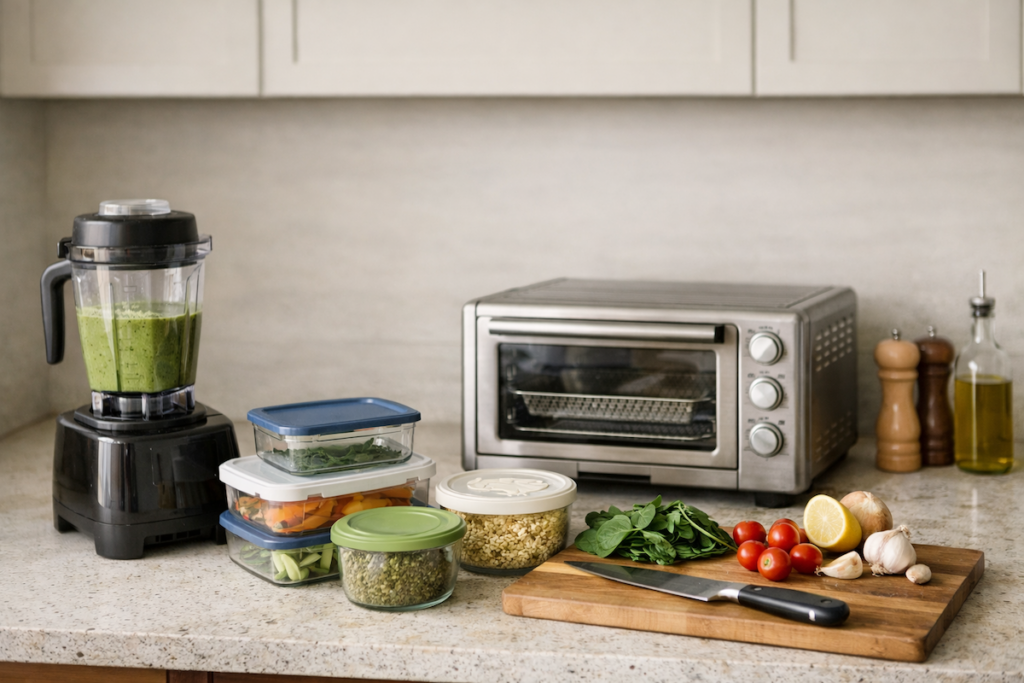
Most kitchens are full of tools that seemed like a good idea at the time. Appliances tucked into cabinets, specialty gadgets bought with the best intentions, and drawers that feel crowded but somehow still don’t make cooking easier.
The problem isn’t that people buy the wrong tools. It’s that many kitchen essentials are marketed for ideal situations instead of real life. Busy mornings, tired evenings, limited counter space, and the need to clean up quickly all change what actually gets used.
This guide focuses on healthy kitchen essentials that actually get used—tools that earn their place because they save time, reduce friction, and support everyday meals. Not everything here is fancy. Not everything is perfect. But everything serves a purpose in a real kitchen.
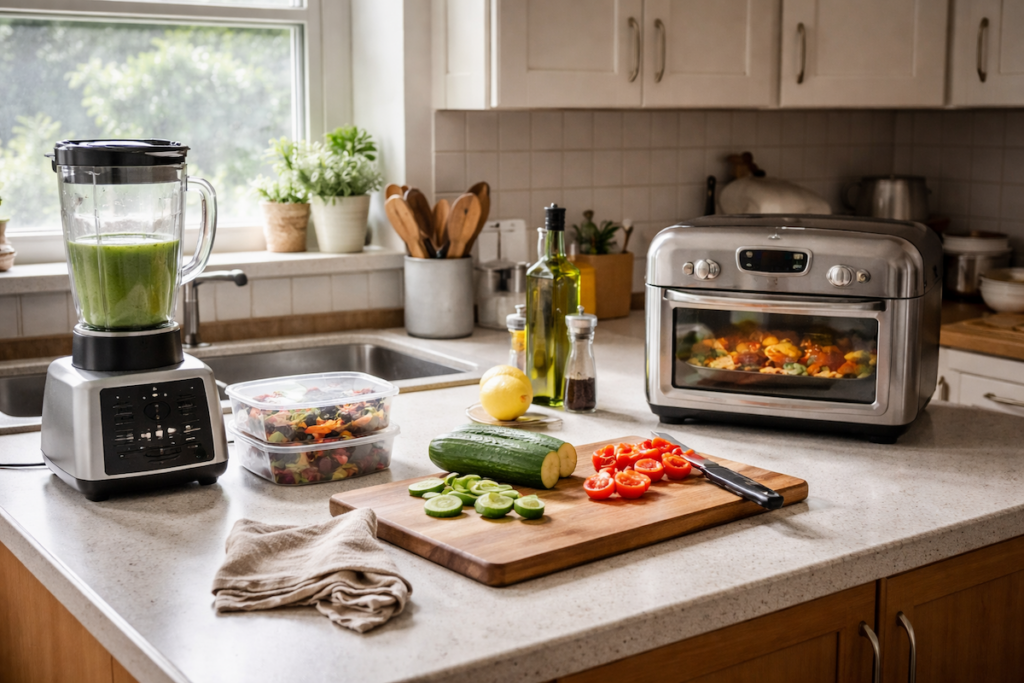
Healthy Kitchen Essentials That Actually Get Used
Healthy kitchen essentials that actually get used are the tools that simplify everyday meals, save time, and fit naturally into real routines—not ideal ones. Before getting into specific tools, it helps to understand why some kitchen items become daily staples while others collect dust.
Tools that get used consistently tend to share a few traits:
-
They replace multiple appliances
-
They reduce cooking or prep time
-
They’re easy to clean
-
They’re accessible without rearranging the kitchen
On the other hand, tools that require extra setup, special recipes, or complicated cleanup often fall out of rotation quickly.
Healthy kitchen essentials aren’t about owning more—they’re about owning fewer things that do more.
Blenders That Earn Their Counter Space
A
The difference between a
When a Blender Is Worth It
Blenders tend to earn their spot when they’re used for:
-
Smoothies and protein shakes
-
Sauces and dressings
-
Simple soups
-
Quick meal prep (pancake batter, chopped ingredients)
If you only pull out a
Two Blender Types That Actually Get Used
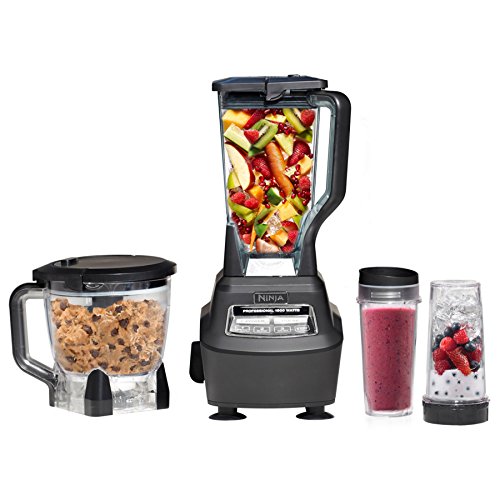
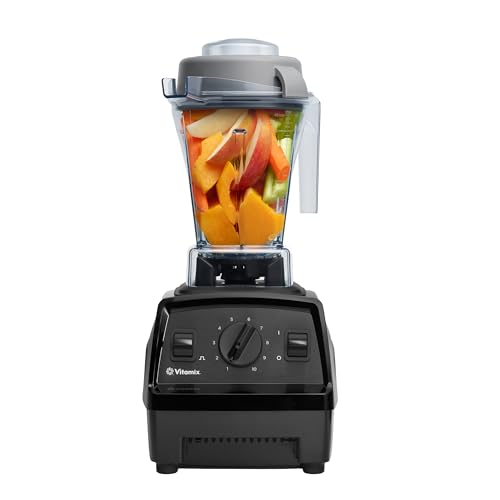
These represent two common paths:
-
A multi-function system that handles blending, chopping, and food prep
-
A high-powered
blender focused on performance and longevity
The key difference isn’t brand loyalty—it’s how much you want one appliance to do versus how much power you need.
Healthy breakfasts you can prep in 10 minutes
Juicing vs smoothies: which is better for your routine?
Air Fryers That Replace Other Appliances
If there’s one appliance category that truly earns daily use in many households, it’s the air fryer—especially models that replace multiple tools.
The biggest reason air fryers get used is speed. They heat quickly, cook efficiently, and don’t require preheating an entire oven for small meals.
Why Some Air Fryers Get Used Daily
Air fryers tend to stick around when they:
-
Replace a toaster
-
Reheat leftovers better than a microwave
-
Cook proteins and vegetables quickly
-
Reduce cleanup
When an appliance handles multiple daily tasks, it naturally becomes part of the routine.
Air Fryers That Actually Earn Space


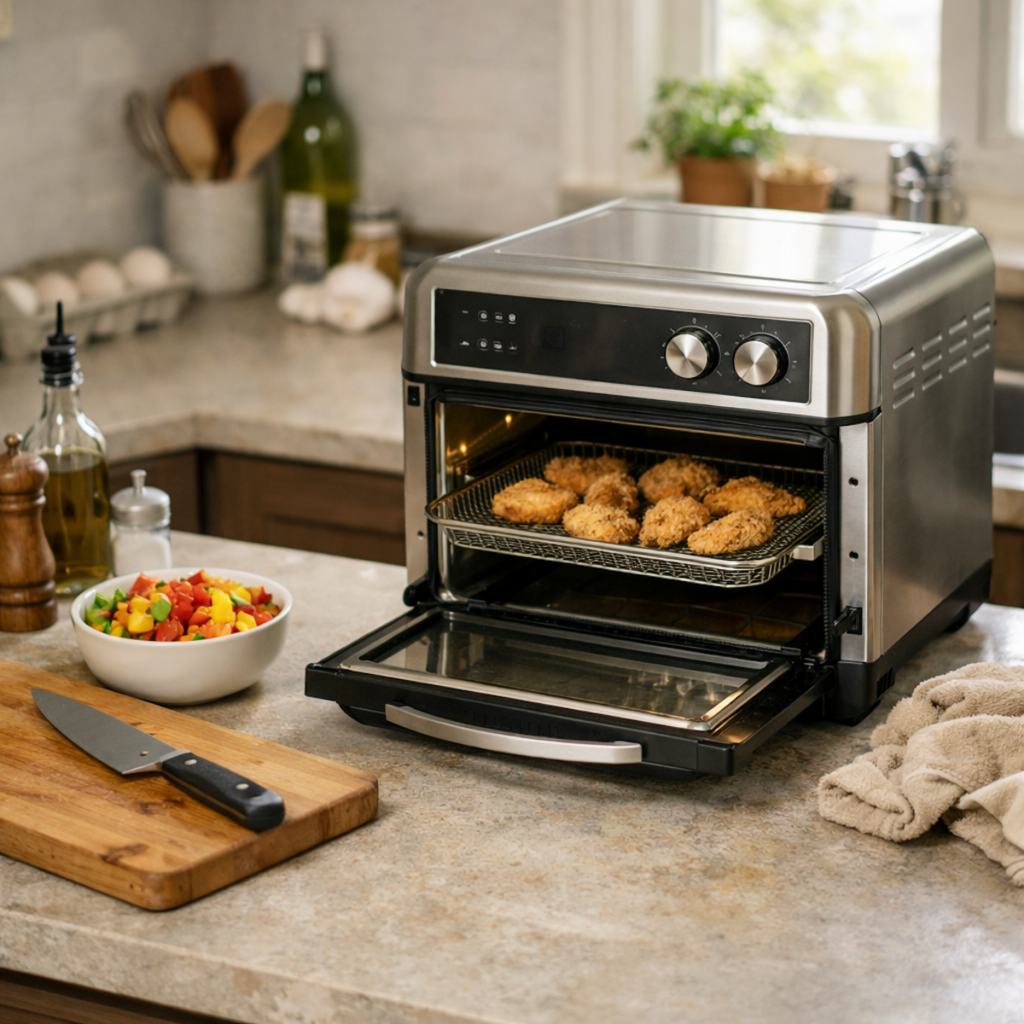
The Ninja countertop air fryer oven stands out because it replaces several appliances at once. Used daily as a toaster replacement, it becomes less of a “special tool” and more of a core kitchen appliance.
Larger basket-style air fryers work well for families or batch cooking, but they tend to get used less often if they don’t replace something else already on the counter.
Simple meal prep ideas for busy weeks
Slow Cooker vs. Instant Pot: What to Know Without Overcommitting
Pressure cookers and slow cookers can be useful, but they don’t belong in every kitchen. One reason these tools go unused is that they require planning ahead in a very specific way.
If you love setting dinner in the morning and coming home to it ready, a slow cooker can make sense. If you like experimenting with recipes or batch cooking, an Instant Pot might appeal.
How to eat better without cooking every night
Food Storage Containers You Actually Reach For
Food storage is one of the least exciting categories—and one of the most important. Containers affect whether leftovers get eaten, meal prep happens, and food stays fresh.
Glass vs. Plastic: The Real Trade-Off
Glass containers are easier to clean, don’t absorb odors, and feel nicer to use. Plastic containers are lighter, harder to break, and often more convenient for busy households.
Many people prefer glass but still use plastic daily. That’s normal.
The goal isn’t perfection—it’s having containers that match how you actually store and reheat food.
Reliable Storage Options
Glass works well for reheating and leftovers. Plastic tends to get used more for grab-and-go, bulk storage, and everyday prep.
This is a category where one or two sets that stack well matter more than variety.
Simple meal prep ideas for busy weeks
Knives and Cutting Boards That Make Prep Easier
You don’t need a professional
What Actually Matters with Knives
Most home cooks only need:
-
One good chef’s
knife -
One serrated
knife -
One smaller utility
knife
Large knife blocks look impressive but often include knives that never leave the block.
Affordable sets can work just as well if they’re sharp and comfortable to use.
Cutting Boards That Stay Out
Cutting boards get used when they:
-
Don’t slide around
-
Fit in the dishwasher or clean easily
-
Aren’t too heavy or precious
Plastic boards are practical and low-maintenance. Wood boards feel nicer but require a bit more care. Many kitchens use both depending on the task.
The Tools That Don’t Get Used (And Why)
One of the most helpful things you can do when building a healthy kitchen is recognizing what doesn’t earn space.
Tools that often go unused:
-
Single-purpose gadgets
-
Appliances that require special recipes
-
Items that are hard to clean
-
Tools that require digging through cabinets
If something adds steps instead of removing them, it probably won’t last in your routine.
How These Tools Support Health (Without Diet Talk)
Healthy kitchens aren’t built around rules or restrictions. They’re built around ease.
Tools that get used:
-
Make it easier to eat at home
-
Reduce reliance on takeout
-
Support simple meals without planning stress
When cooking feels manageable, healthier choices come more naturally.
How to Decide What Your Kitchen Actually Needs
Instead of asking “What should I buy?”, ask:
-
What do I already use every week?
-
What slows me down the most?
-
What takes up space without helping?
Start by upgrading or simplifying what you already rely on.
Affiliate Disclosure
This post may include affiliate links to products mentioned. If you choose to purchase through these links, the site may earn a small commission at no additional cost to you. Products are referenced based on everyday use and practicality, not sponsorship.
Conclusion: Fewer Tools, Better Habits
A healthy kitchen doesn’t need to be full—it needs to be functional.
The healthy kitchen essentials that actually get used are the ones that fit your habits, your space, and your energy level. Tools that save time, reduce cleanup, and support simple meals naturally earn their place.
If you’re building healthier routines, start with what you’ll realistically use tomorrow—not what looks good on a shelf.