
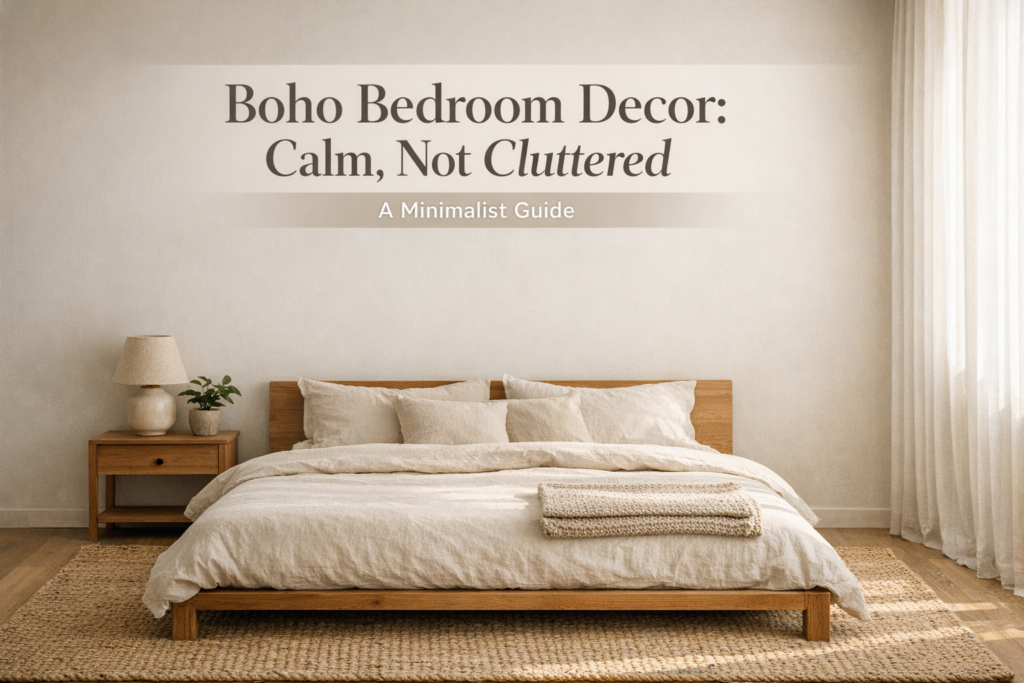
Want a calm boho bedroom that feels curated, not crowded? This piece shows how to blend warm, natural textures and restrained color so the space breathes while still feeling personal.
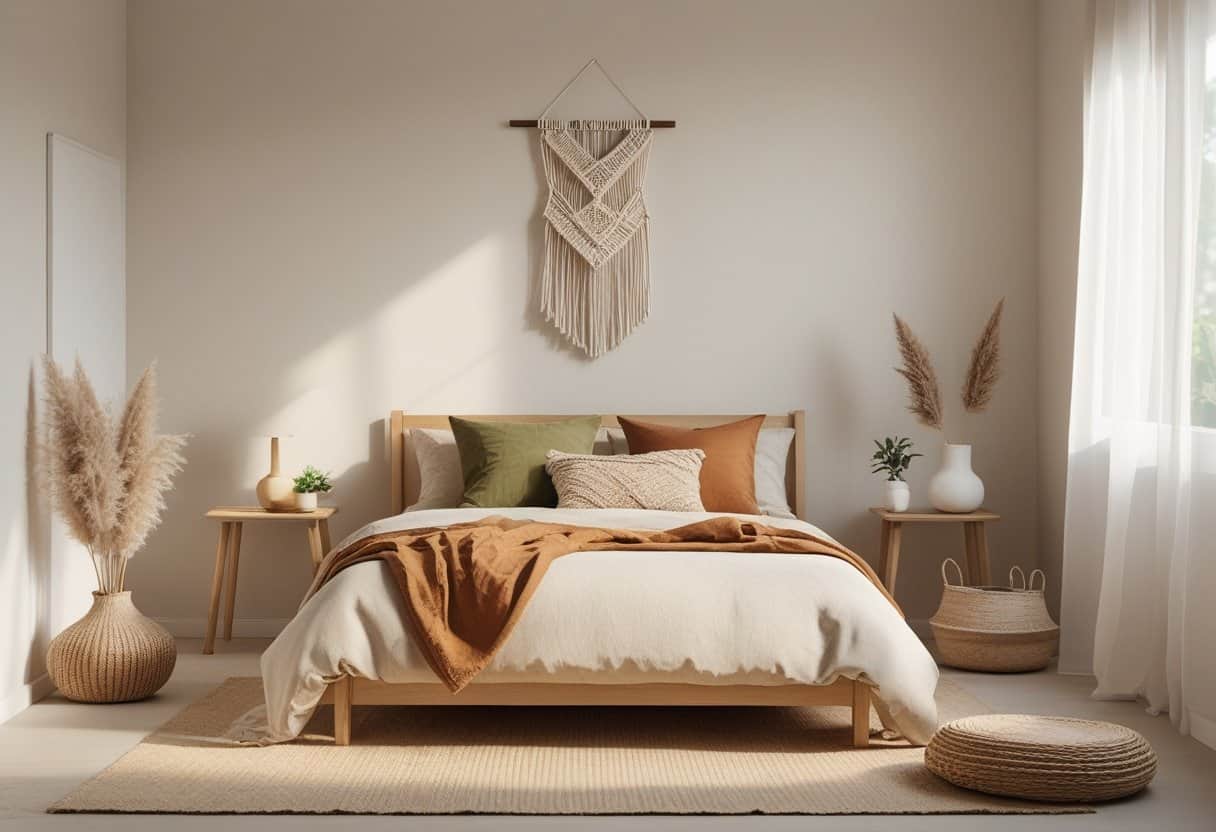
Use a neutral base, one or two statement textures, and purposeful accents to get a relaxed boho look without clutter.
They will learn how to choose a tranquil palette, layer natural materials, pick minimalist furniture that doubles as storage, and add plants and lighting that enhance calm.
Expect clear, actionable guidance on textiles, intentional decor, and smart storage so the room feels both lived-in and serene—an inviting retreat you can actually maintain.
Defining Calm and Minimalist Bohemian Bedroom Decor
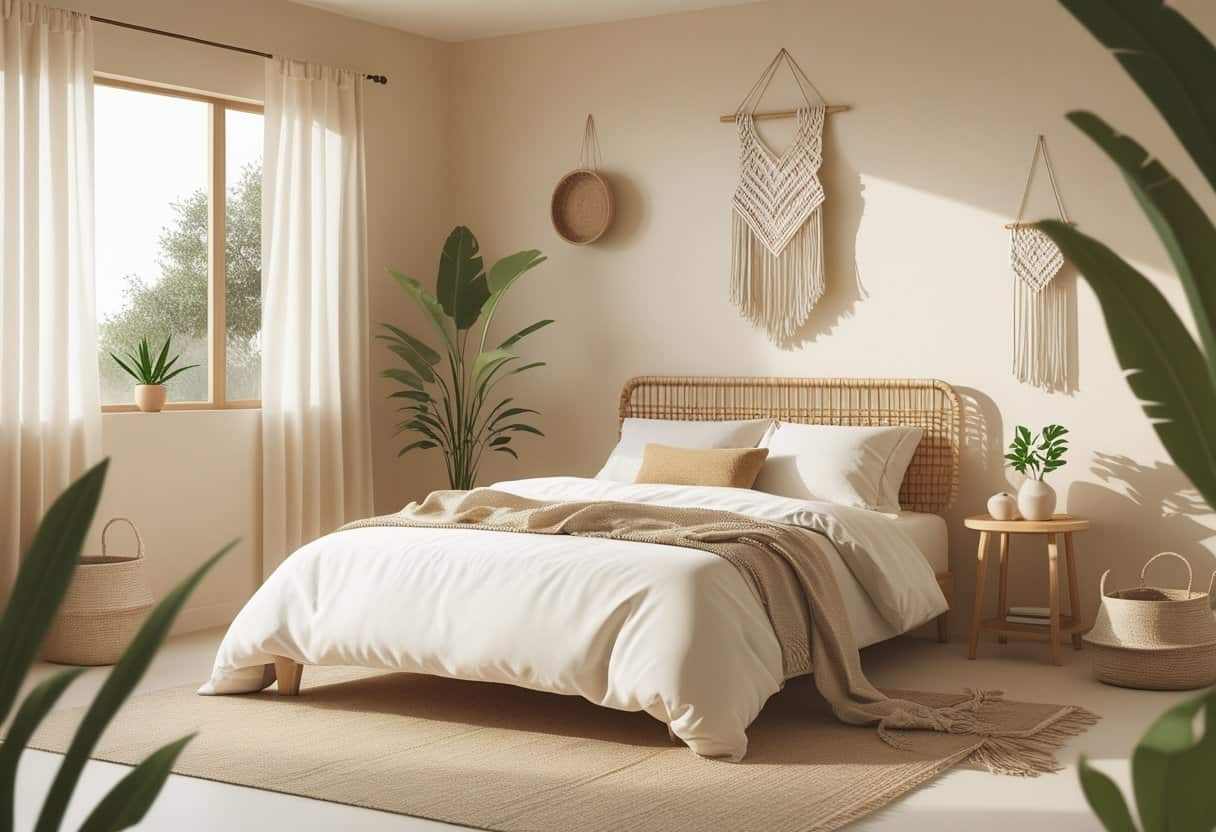
Calm, minimalist boho bedrooms use a restrained palette, natural materials, and a few meaningful textures to feel warm without appearing busy. The focus lies on functional furniture, curated textiles, and greenery placed with intention.
What Makes a Bedroom Boho Yet Uncluttered
-
Limit textures to three core materials (for example: linen, wood, and a woven accent)
-
Use one patterned textile as a focal point
-
Choose low-profile, multipurpose furniture
-
Leave intentional empty space on walls and floors
Hidden or visually uniform storage—woven baskets, closed dressers, or a slim armoire—prevents the collected boho look from becoming chaotic.
The Role of Minimalism in Boho Design
Minimalism supplies the organizational rules that stop boho styling from feeling chaotic. It prescribes selective placement: limit decorative objects to three to five per surface and rotate items seasonally.
Color choices should center on neutrals—cream, taupe, warm gray—with one accent color introduced via a single textile or plant. This keeps the look cohesive and restful.
Materials drive the mood: raw wood, rattan, and natural fiber rugs create warmth while sticking to simple forms. Minimalist lighting—an unadorned pendant or a single bedside lamp—reduces visual clutter and maintains calm.
Balancing Comfort and Simplicity
Comfort comes from tactile layers used sparingly rather than abundance. Pair a soft linen duvet with two pillows and one textured throw; that provides coziness without crowding the bed.
Introduce plants in plain pots to add life and improve air quality while keeping forms simple. A single statement chair or pouf offers a relaxed seating spot without overwhelming the layout.
Functionality guides decor choices. Choose pieces that look good and serve storage, display, or seating needs. This balance lets the room feel lived-in and calm, true to both boho style and minimalist principles.
Choosing a Tranquil Color Palette
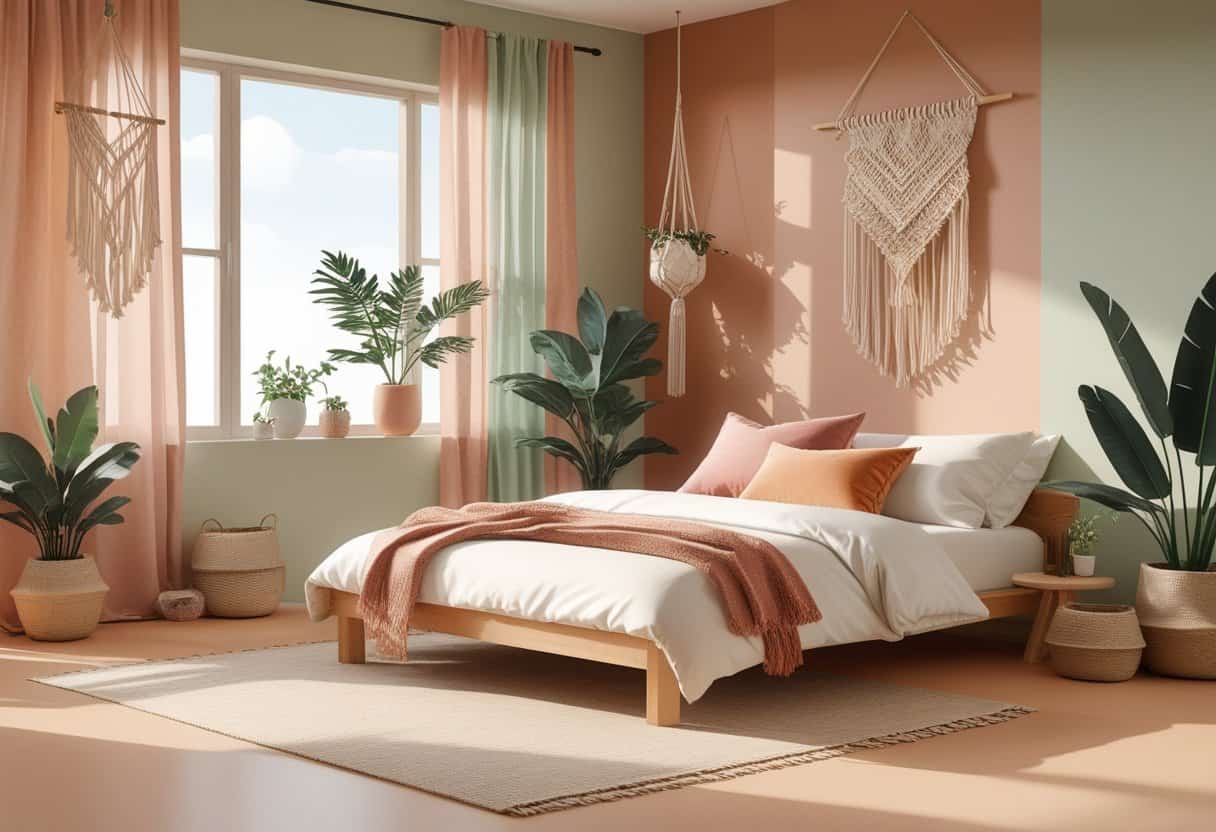
A calming bohemian bedroom starts with a soft, neutral foundation that allows texture to stand out.
Build the Base With Warm Neutrals
Walls and large surfaces should stay within a warm neutral range—soft beige, pale taupe, or warm greige. These tones reduce contrast and create a soothing backdrop for textiles and plants.
Stick to two neutral values:
-
One light tone (walls, bedding)
-
One darker anchor (bed frame, dresser)
Matte or low-sheen finishes keep light from bouncing harshly and help the room feel relaxed.
Add Earthy Accent Colors Sparingly
Introduce no more than two accent colors, such as terracotta, muted mustard, olive green, or clay. Keep accents to roughly 10–20% of the room’s visible color and cluster them intentionally—on a throw pillow, rug detail, or ceramic planter.
This keeps the palette cohesive and prevents visual overload.
Layering Natural Textures Without Clutter
Keep the palette restrained, choose a few high-impact pieces, and let each texture have space to breathe. Focus on natural fibers and handcrafted accents that add warmth without visual noise.
Textiles That Add Warmth and Calm
They should pick textiles with clear purpose: a linen throw for cooling breathability, a chunky wool throw for winter warmth, and a cotton duvet for daily comfort. Choose muted tones—warm white, sand, or soft ochre—so patterns don’t compete. Prioritize one textured pillow and one smooth pillow per bed to create contrast without clutter.
Care about scale and maintenance. Large-knit blankets read as a single object; small fringe or tassels add interest but keep them limited to one or two items. Washable fibers like cotton and linen go on everyday use items; reserve delicate macramé pieces for wall hangings or low-touch décor.
They should layer deliberately: base bedding (smooth), mid layer (light linen or muslin), top layer (textured wool or chunky knit). This sequence gives depth while keeping the bed tidy and calm.
Selecting the Right Rugs and Throws
Start with a natural-fiber anchor rug—sisal, jute, or low-pile wool—sized to frame the bed. A sisal or jute rug provides an earthy base that hides wear and pairs well with layered textiles. If using layered rugs, place a small, soft wool rug beside the bed for barefoot comfort and color contrast.
Match rug texture to activity zones. High-traffic areas benefit from durable sisal or jute; lounging zones work better with thick wool or a textured cotton rug. Throw selection should follow function: a linen throw for breathability, a wool throw for insulation, and a lightweight cotton throw for layering. Fold throws neatly on a bench or at the foot of the bed to avoid a cluttered look.
Limit patterned rugs and throws to one piece per room. That keeps visual focus and prevents the space from feeling busy despite multiple textures.
Handmade and Woven Accents
They should use handmade items as focal points rather than scatter decor. A single macramé wall hanging or a large woven wall basket offers texture and craftsmanship without overwhelming the wall. Choose sculptural woven pendant lights to add warmth and subtle shadowing over bedside tables.
Select accents that echo existing materials: a rattan lamp base beside a jute rug, or a ceramic vase next to a textured throw. Keep small woven items—coasters, placemats, tiny baskets—grouped on a single shelf or dresser to maintain visual order.
Colorful tassels and textile wall hangings work best when used sparingly. One textile wall hanging or a pair of woven wall baskets creates rhythm. Prioritize scale, quality, and placement so each handmade piece reads as intentional rather than cluttered.
Selecting Minimalist Furniture and Functional Pieces
Choose pieces that emphasize clean lines, natural materials, and purposeful function. Prioritize items that sit low to the ground, provide hidden storage, or double as decor so the room feels calm rather than crowded.
Low-Profile and Platform Beds
A low-profile or platform bed anchors a boho-minimal bedroom without visual bulk. Choose a simple wooden bed frame—oak, birch, or reclaimed wood—with a narrow headboard or no headboard to keep sightlines open. Platform beds eliminate the need for a box spring, lowering the mattress height and creating a grounded, spacious feel.
For a touch of boho texture, select a rattan headboard or a slatted wooden frame. Avoid ornate legs or heavy carvings; instead, prefer straight, tapered legs or a flush base. If a canopy is desired, use a minimal, airy frame rather than heavy drapery to preserve the uncluttered look.
Natural Wood and Rattan Elements
Natural wood tones and rattan introduce warmth while maintaining simplicity. Opt for furniture in light to medium wood finishes—like ash, oak, or reclaimed wood—to complement neutral walls and linens. Reclaimed wood accents add character without crowding the palette when used sparingly: a bench, bedside slab, or floating shelf works well.
Incorporate rattan through a chair, woven headboard, or storage baskets. A rattan chair with clean lines provides seating and sculptural interest. Keep finishes consistent across major pieces to avoid visual noise: match wood tones of the bed frame, dresser, and shelving where possible.
Furniture With Integrated Storage
Functional furniture with integrated storage reduces clutter and keeps the room calm. Choose low dressers and platform beds with built-in drawers to hide linens and off-season clothes. A wooden bed frame with under-bed drawers or a lift-up platform maximizes storage without adding extra pieces.
Floating shelves and wall-mounted bedside units free floor space while storing books and small decor. Prefer closed cabinetry over open shelving for bulkier items; use baskets or simple boxes on open shelves to keep surfaces tidy. Reclaimed wood trunks or benches at the foot of the bed offer dual seating and concealed storage.
Functional Decor Essentials
Select decor that has utility as well as style to maintain a serene, useful room. Use bedside tables with one drawer and a narrow top to hold a lamp and a book. Choose lamps with dimmable warm bulbs to layer light without creating clutter. Mirrors mounted above a low dresser visually expand the room and eliminate the need for additional furniture.
Prioritize multiuse items: a rattan chair that doubles as a laundry basket holder, or a woven bench that serves as seating and blanket storage. Keep textile accents—throws, rugs, pillows—in neutral palettes and natural fibers to add texture without heavy pattern. Use a few floating shelves for curated plants or pottery instead of crowding surfaces with many small objects.
Incorporating Greenery and Natural Decor
Greenery and natural decor create calm through deliberate placement, restrained color, and varied textures. Choose hardy plants, simple containers, and a few dried stems to add life without clutter.
Best Plants for a Minimal Boho Space
Choose low-maintenance plants that offer vertical interest or sculptural form. Snake plant (Sansevieria) and ZZ plant tolerate low light and infrequent watering, making them ideal for busy households. A single tall snake plant in a woven basket beside the bed provides height without visual noise.
For softness and trailing motion, pothos or heartleaf philodendron works well in hanging planters. Use one medium pothos in a macramé hanger over a nightstand rather than multiple small pots to keep the look minimal. Succulents and small cacti suit sunny windowsills; a trio in identical ceramic pots reads intentional rather than cluttered.
Select containers in neutral tones—terracotta, matte white, or natural rattan—to maintain a cohesive boho palette. Group plants in odd numbers and vary heights to create an arranged look that remains airy.
Displaying Greenery Without Overwhelming
Limit the number of visible pots to preserve calm. Aim for three to five plant placements maximum in a typical bedroom: one floor plant, one hanging, and one or two tabletop accents. This keeps the eye focused and prevents a crowded feeling.
Use vertical solutions like wall-mounted planters or a single narrow shelf to concentrate greenery upward. Keep foliage away from busy sightlines—place plants in corners, near the window, or at the foot of the bed. Choose matching or coordinated containers to unify disparate plant types.
Rotate plants seasonally and prune regularly to avoid overgrowth. A simple watering schedule and a single tray under grouped pots reduce spills and visual mess. For planting ideas and hanging-planter inspiration, review curated green boho styling examples like those found at Life With Hana.
Pampas Grass and Dried Arrangements
Pampas grass adds height and soft texture without maintenance, perfect for a calm boho bedroom. Use one or two stems in a tall, narrow vase rather than a full bouquet to keep proportions airy. Natural beige or ivory plumes pair well with sage or eucalyptus bedding.
Combine pampas with a few dried eucalyptus or bunny tail stems for contrast. Keep stems trimmed to room-scale—about two-thirds the height of adjacent furniture—to avoid overpowering the space. Place the arrangement near a reading nook or beside a dresser rather than on the bedside table to reduce visual clutter.
Choose unbleached, naturally toned stems and avoid highly processed or dyed bunches. Store dried arrangements away from direct sunlight to preserve color and gently dust them monthly to maintain a neat, minimalist appearance.
Textiles, Bedding, and Layered Comfort
Use breathable, low-maintenance fabrics and a restrained layering plan to create a calm, tactile bed that invites rest. Prioritize texture and neutral color harmony so each piece contributes warmth without visual clutter.
Soft Linens and Lightweight Materials
Choose linen bedding for breathability and a lived-in texture that softens over time. Linen sheets and duvet covers wick moisture and regulate temperature, which helps maintain overnight comfort without heavy blankets. For window treatments, linen curtains filter light softly; select lightweight weaves in warm neutrals to keep the room bright and calm.
Add a few functional floor cushions or a Moroccan pouf near a reading corner. Pick cotton or woven jute covers for easy cleaning. Use poufs as occasional seating and storage tops; their low profile keeps the room feeling open while providing tactile interest.
Layered Bedding for Serenity
Start with a crisp linen or cotton base sheet in a warm neutral—beige, soft cream, or muted sage—to anchor the palette. Add a lightweight linen duvet or a cotton quilt for the primary layer, then a textured throw at the foot of the bed for contrast. Keep the number of layers purposeful: basal sheet, mid duvet, and one decorative throw typically balance warmth and simplicity.
Vary textures rather than patterns: pair a smooth linen duvet with a chunky knit throw or a bouclé cushion. This creates depth without visual noise. Store seasonal blankets in a woven basket or under-bed drawer to avoid excess on surfaces.
Subtle Patterns and Patterned Pillows
Introduce pattern sparingly through patterned pillows to add personality without clutter. Choose pillows with small-scale geometric prints, muted florals, or tone-on-tone embroidery that tie back to the room’s color family. Limit bold motifs to one or two pillows so the bed reads cohesive.
Mix pillow shapes—standard, square, and a single lumbar—for visual layering. Keep most pillow covers in natural fibers like linen or cotton to maintain breathability. Rotate patterned pillows seasonally to refresh the look while preserving the calm, uncluttered aesthetic.
Intentional Decor: Art, Lighting, and Personal Touches
Focus on a few meaningful pieces that add warmth and character while keeping visual clutter low. Prioritize scale, texture, and functionality so each item contributes to the room’s calm, modern boho feel.
Choosing Minimalist Boho Wall Art
Choose one or two statement pieces rather than a gallery wall. A large woven textile, an abstract desert print, or a muted landscape in a simple wood frame establishes boho flair without crowding the room. Keep art colors within the bedroom’s neutral palette — warm beige, terracotta, muted ochre — so pieces feel integrated rather than competing.
Scale matters: hang a single large artwork above a low-profile bed or lean a sizable framed print against the wall on a dresser. Use matte or natural-finish frames to maintain a handcrafted vibe. For texture, add a small macramé or woven panel; it reads as art while echoing the room’s textiles.
If they want variety, suggest rotating one smaller piece seasonally. That preserves novelty while avoiding permanent clutter. For examples of calm, minimal boho wall art approaches, see curated boho ideas at Architectural Digest.
Lighting for a Warm, Relaxed Atmosphere
Layer lighting to avoid harsh overhead glare. Combine a central statement lighting fixture — a rattan pendant or woven lantern — with task lighting such as a bedside table lamp and a floor lamp by a reading nook. Statement lighting sets the room’s tone; choose a fixture with organic materials and soft lines for a modern boho bedroom.
Use warm LED bulbs (2700–3000K) and dimmers to control brightness for different activities. Place a low-wattage lamp near seating for reading and a soft bedside sconce for nighttime. Lantern-style fixtures or paper shades diffuse light and add boho design texture without visual heaviness.
Prioritize placement: a pendant centered over the bed anchors the space; a floor lamp beside a chair creates a cozy nook. Keep cords tidy with concealed channels or baskets to preserve the calm, uncluttered look.
Personal Accents and Vintage Finds
Select a few vintage accents that tell a story: a worn wooden stool, a mid-century ceramic lamp, or a hand-thrown bowl on the dresser. These pieces add authenticity and contrast with modern bohemian furnishings. Limit decorative objects to functional or meaningful items to maintain a clean aesthetic.
Incorporate textiles as personal accents — a fringed throw, a faded kilim cushion, or a single layered rug — to add pattern without excess. Use woven baskets for visible storage; they contribute texture while hiding clutter. For surfaces, allow negative space: display one plant, one book, and one sentimental object per surface.
Encourage opting for personality over quantity. A curated collection of small items on a tray or in a shallow box reads intentional, not crowded. Mixing a vintage lamp with contemporary, low-profile furniture ties boho bedroom decor to modern sensibilities.
Smart Storage Solutions for a Clutter-Free Space
Keep everyday items accessible while preserving a calm, airy look. Prioritize folded textiles, small accessories, and seasonal items with low-profile pieces that match natural textures.
Using Baskets and Under-Bed Options
Woven baskets and natural fiber baskets work well in a small boho bedroom because they hide clutter while adding texture. Choose flat-bottomed baskets for stability and sizes that fit under the bed or on open shelving. Label inside with fabric tags or use clear, removable pouches to keep small items organized without ruining the woven look.
For under-bed storage, pick shallow, rolling bins or slim fabric drawers that slide easily on hardwood or carpeted floors. Opt for breathable materials—cotton canvas or ventilated fabric—so linens and clothing stay fresh. Use a pair of matching baskets at the foot of the bed for spare throws and pillows to maintain a tidy visual rhythm.
Stylish Organization That Blends In
Integrate storage into decor by using baskets as visible, decorative elements rather than hidden containers. Stack two different-sized natural fiber baskets in a corner to store magazines or overflow laundry. Select neutral tones—jute, seagrass, or rattan—so storage reads as intentional design, not clutter.
Mix functional pieces like a tapestry-covered storage bench or a vintage trunk at the foot of the bed for larger items. Mount a small set of woven wall pockets for mail or remotes to free up surfaces. For more ideas that combine boho style with practical storage, see this gallery of boho-inspired DIY storage solutions.