
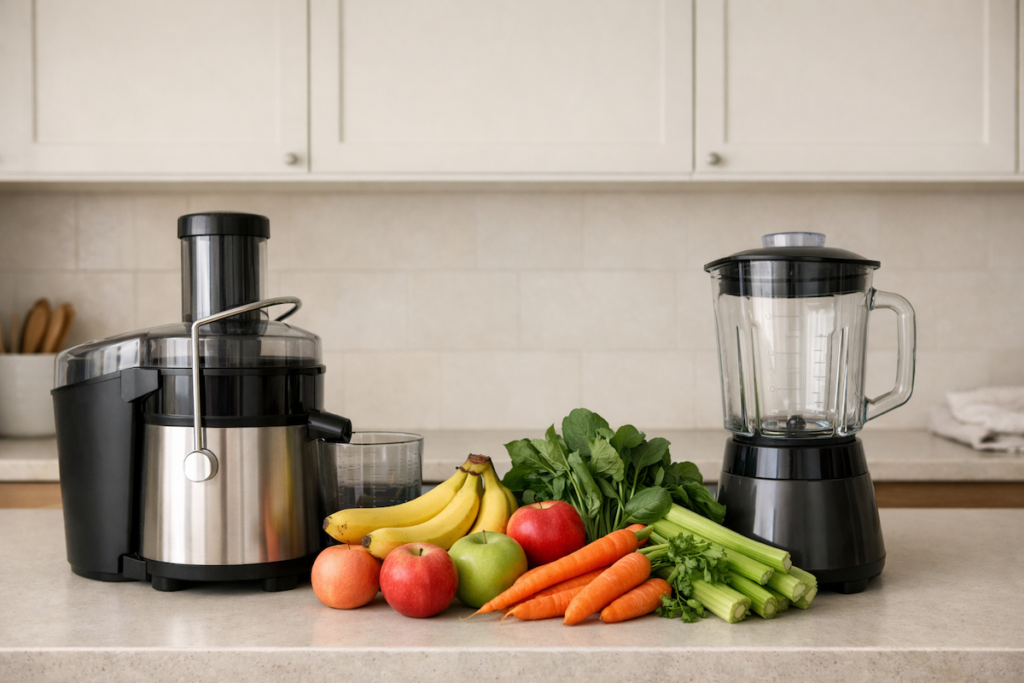
If you’ve ever stood in your kitchen wondering whether you should be juicing or making smoothies, you’re not alone. The question of juicing vs smoothies comes up a lot—especially for people trying to eat better without overhauling their entire lifestyle.
Both options promise an easy way to get more fruits and vegetables into your day. Both can support healthier habits. And both can be done well—or poorly—depending on how they fit into your real life.
This guide is designed to help you decide which option makes the most sense for you. Not in theory, but in practice. We’ll look at how juicing and smoothies differ, what they’re best used for, and how factors like time, space, cleanup, and consistency should influence your choice.
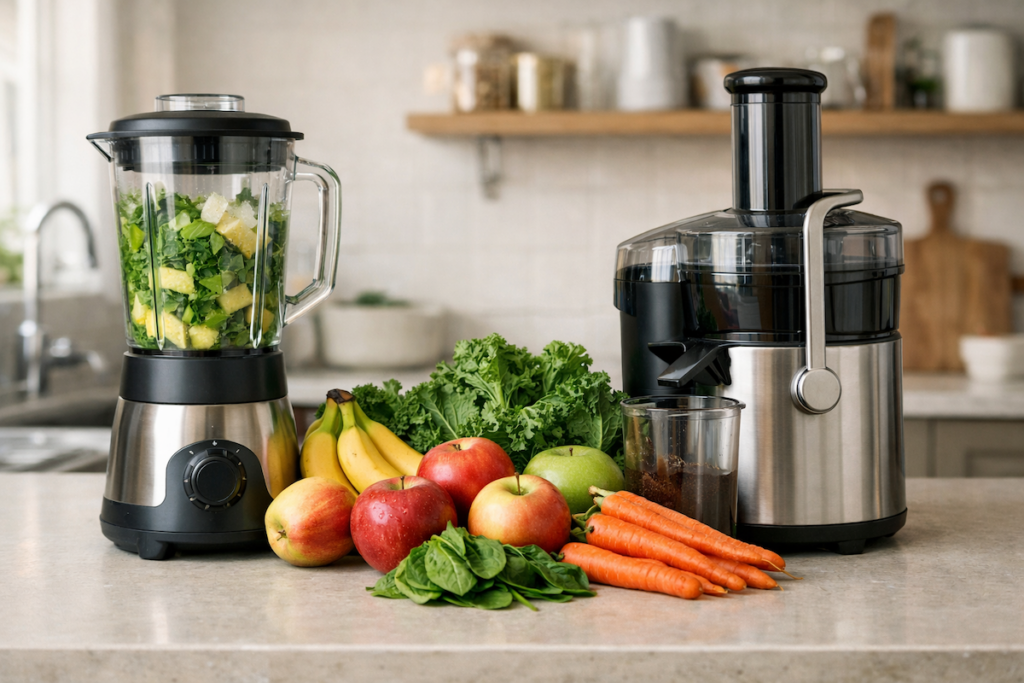
What Juicing Actually Is (and What It Isn’t)
Juicing is the process of extracting liquid from fruits and vegetables while removing most of the fiber. The result is a smooth, drinkable juice that’s easy to consume quickly.
This can be helpful if eating large amounts of produce feels unrealistic, or if chewing raw vegetables is unappealing. Juicing allows you to consume a concentrated amount of fruits and vegetables in a short time.
That said, juicing is not a shortcut to health on its own. It works best as a supplement to a balanced diet, not a replacement for whole foods.
How Juicing Fits into Daily Life
Juicing tends to work well for people who:
-
Prefer lighter drinks
-
Want to drink produce rather than eat it
-
Like routines that feel simple and repeatable
-
Are okay with a bit of cleanup
Juicing is often done in the morning or as a mid-day refresh. Because juice is lighter and absorbed quickly, many people enjoy it when they want nutrients without feeling full.
What Smoothies Are Designed to Do
Smoothies blend whole fruits and vegetables together, keeping the fiber intact. This results in a thicker drink that’s more filling and often used as a meal or snack.
Because smoothies retain fiber, they digest more slowly. This can help with satiety and steady energy, which is why many people rely on smoothies for breakfast.
Smoothies also tend to be more flexible. You can add protein powders, nut butters, seeds, yogurt, or milk alternatives to customize texture and nutrition.
Why Smoothies Are So Popular
Smoothies are often preferred because they:
-
Feel more like a meal
-
Are forgiving with ingredients
-
Can replace breakfast or lunch
-
Are easier to adjust to taste preferences
For people who don’t like the idea of “drinking vegetables,” smoothies can feel more approachable.
👉 Internal Link Opportunity: Healthy breakfast ideas for busy mornings
Juicing vs Smoothies: The Core Differences
Before getting into personal preferences, it helps to look at the practical differences side by side. These differences affect how likely you are to stick with either option.
Comparison Table: Juicing vs Smoothies
| Factor | Juicing | Smoothies |
|---|---|---|
| Fiber | Mostly removed | Fully retained |
| Texture | Thin, liquid | Thick, creamy |
| Fullness | Light | Filling |
| Prep Time | Moderate | Quick |
| Cleanup | More parts | Simple |
| Storage | Short-term | Short-term |
| Best For | Nutrient boost | Meal replacement |
This table only scratches the surface. The real decision comes down to how these differences play out in everyday routines.
Fiber: Why It Changes Everything
Fiber is one of the biggest differences between juicing and smoothies, and it’s worth understanding how it affects your body.
When fiber is removed during juicing, nutrients are absorbed quickly. This can be useful if you’re trying to increase vegetable intake without feeling overly full. However, fiber plays an important role in digestion and blood sugar balance.
Smoothies keep fiber intact, which:
-
Slows digestion
-
Promotes fullness
-
Supports gut health
Neither approach is inherently better. The key is balance. If your diet already includes fiber-rich meals, juicing can be a helpful addition. If not, smoothies may provide more nutritional support.
Time, Cleanup, and Realistic Use
One of the biggest reasons people abandon healthy habits is friction. Too many steps, too much cleanup, or too much thinking can derail even the best intentions.
Juicing in Real Life
Juicing often requires:
-
Washing produce
-
Cutting ingredients
-
Assembling the juicer
-
Cleaning multiple parts
For some people, this routine feels calming. For others, it’s a barrier.
Cold press juicers, in particular, tend to take longer to clean. This doesn’t mean they’re impractical, but it does mean they work best for people who are committed to using them regularly.
Smoothies in Real Life
Smoothies usually involve:
-
Adding ingredients to a
blender -
Blending
-
Rinsing the pitcher
Cleanup is often quicker, which makes smoothies easier to maintain during busy weeks.
👉 Internal Link Opportunity: Kitchen tools that actually get used
Space and Storage Considerations
Kitchen space matters more than most people admit. If an appliance is hard to store or awkward to use, it’s less likely to become part of your routine.
Juicers often:
-
Take up more counter space
-
Have multiple components
-
Are heavier to move
Blenders tend to:
-
Be easier to store
-
Serve multiple purposes
-
Fit into more kitchen layouts
If you have limited counter space, this alone may influence your decision.
Taste, Texture, and Enjoyment
Enjoyment matters. If you don’t like the taste or texture of what you’re making, consistency becomes unlikely.
Juice tends to taste:
-
Lighter
-
Fresher
-
Less filling
Smoothies tend to taste:
-
Richer
-
Creamier
-
More customizable
Some people enjoy juice but find smoothies too heavy. Others feel the opposite. There’s no universal preference, which is why trying both can be helpful.
Juicing for Beginners: What to Know First
If you’re new to juicing, it’s important to start with realistic expectations.
Juicing is not about perfection. It’s about making vegetables easier to consume. Starting simple—using familiar fruits and mild vegetables—can help you build confidence.
Common beginner mistakes include:
-
Using too many ingredients
-
Expecting juice to replace meals
-
Ignoring cleanup realities
Keeping things simple often leads to better long-term habits.
👉 Internal Link Opportunity: How to start healthy habits without burnout
Smoothies for Beginners: Common Pitfalls
Smoothies can also be misunderstood. While they’re often marketed as “healthy,” it’s easy to turn a smoothie into a high-sugar drink without realizing it.
To keep smoothies balanced:
-
Use vegetables as a base
-
Limit added sweeteners
-
Include protein or healthy fats
Smoothies work best when they’re intentional, not just fruit blended with juice.
Juicing vs Smoothies for Busy Schedules
Time constraints matter. If mornings are rushed, you’ll want the option that fits your pace.
Juicing can work for:
-
Planned routines
-
Prep-ahead habits
-
People who enjoy slower mornings
Smoothies tend to suit:
-
Grab-and-go schedules
-
Families
-
Work-from-home routines
Your schedule should guide your choice more than nutrition trends.
Can You Do Both?
Yes—and many people do.
Using both juicing and smoothies at different times can provide flexibility. For example:
-
Juice in the afternoon for a light refresh
-
Smoothie in the morning as breakfast
The goal isn’t choosing sides. It’s choosing what supports consistency.
Not sure which juicer actually makes sense for your routine?
If you’re leaning toward juicing but don’t know where to start, I put together a practical comparison of the most popular juicers—breaking down which ones work best for beginners, busy families, and daily use.
👉 Check out our post on Best juicers for beginners, busy families, and daily use
Cost Considerations Over Time
Cost isn’t just about the appliance. It’s also about ingredients and waste.
Juicing often uses:
-
More produce per serving
-
Higher upfront appliance cost
Smoothies:
-
Stretch ingredients further
-
Allow use of frozen produce
-
Reduce waste
Neither option is inherently expensive, but smoothies tend to be more budget-friendly over time.
When Juicing Makes More Sense
Juicing may be the better option if:
-
You struggle to eat vegetables
-
You want lighter drinks
-
You enjoy simple routines
-
You already eat fiber-rich meals
Juicing is best seen as a supplement, not a replacement.
When Smoothies Are the Better Choice
Smoothies may make more sense if:
-
You want meal replacements
-
You need sustained energy
-
You prefer thicker textures
-
You want fewer appliances
Smoothies are often easier to maintain long-term.
Affiliate Disclosure
Some posts may reference kitchen tools or appliances that support healthy routines. If you choose to purchase through recommended links, the site may earn a small commission at no additional cost to you. All recommendations are based on practical use and real-world considerations.
Making the Right Choice for You
The debate around juicing vs smoothies isn’t about which one is healthier. It’s about which one you’ll actually use.
If juicing feels approachable and fits your routine, it can be a valuable addition. If smoothies feel easier and more filling, they may be the better choice. Many people find that a combination works best over time.
Final Thoughts: Consistency Over Perfection
The best choice is the one that supports consistency. Whether you choose juicing, smoothies, or a mix of both, what matters most is that it fits into your life without adding stress.
There’s no requirement to do things perfectly. Small, repeatable habits tend to have a bigger impact than dramatic changes that don’t last.
If you’re deciding between juicing vs smoothies, start with what feels realistic. You can always adjust as your routine evolves.