
If weeknight dinners regularly feel rushed, chaotic, or last-minute, you’re not failing at planning—you’re probably just trying to meal prep in a way that doesn’t fit your life. The idea of meal prep sounds great in theory, but in practice, it often gets tangled up with unrealistic expectations, complicated recipes, or a full Sunday spent cooking.
This guide focuses on simple meal prep ideas for busy weeks—the kind that work for real households with jobs, schedules, and limited energy. You won’t find rigid plans or perfection-driven systems here. Instead, you’ll learn how to prep just enough to make the week easier, without turning your kitchen into a second job.
What Simple Meal Prep Really Means
Before getting into specific ideas, it helps to redefine what “meal prep” actually is. For many people, the term brings to mind rows of identical containers filled with the same meal for five days straight. That approach works for some, but it’s not the only—or even the most common—way to prep.
Simple meal prep is about reducing friction. It’s about making future meals easier, not perfectly planned.
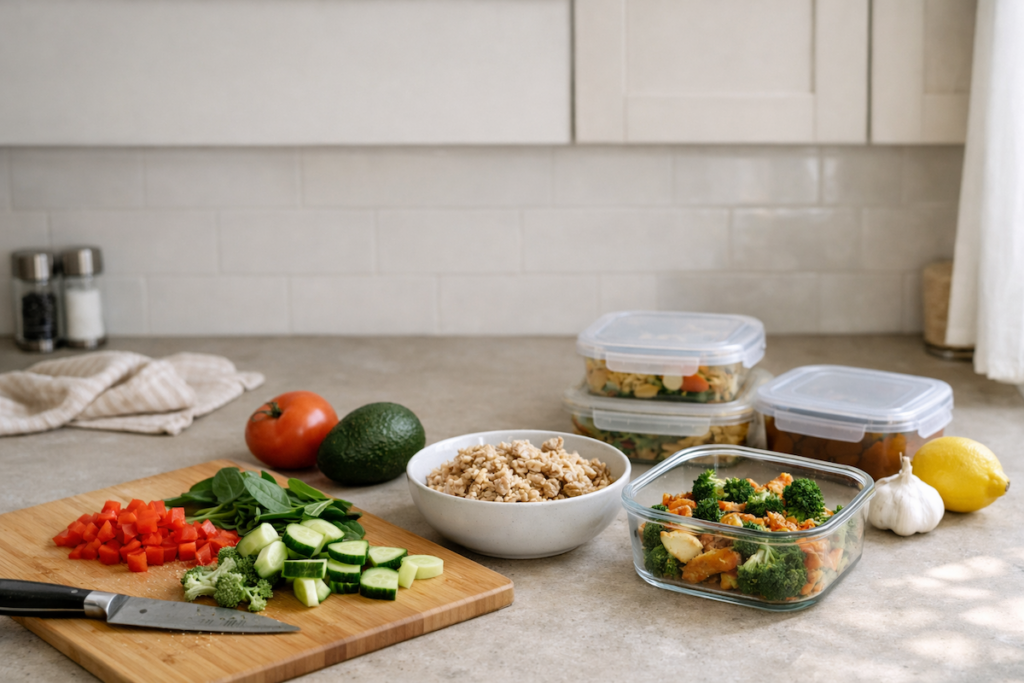
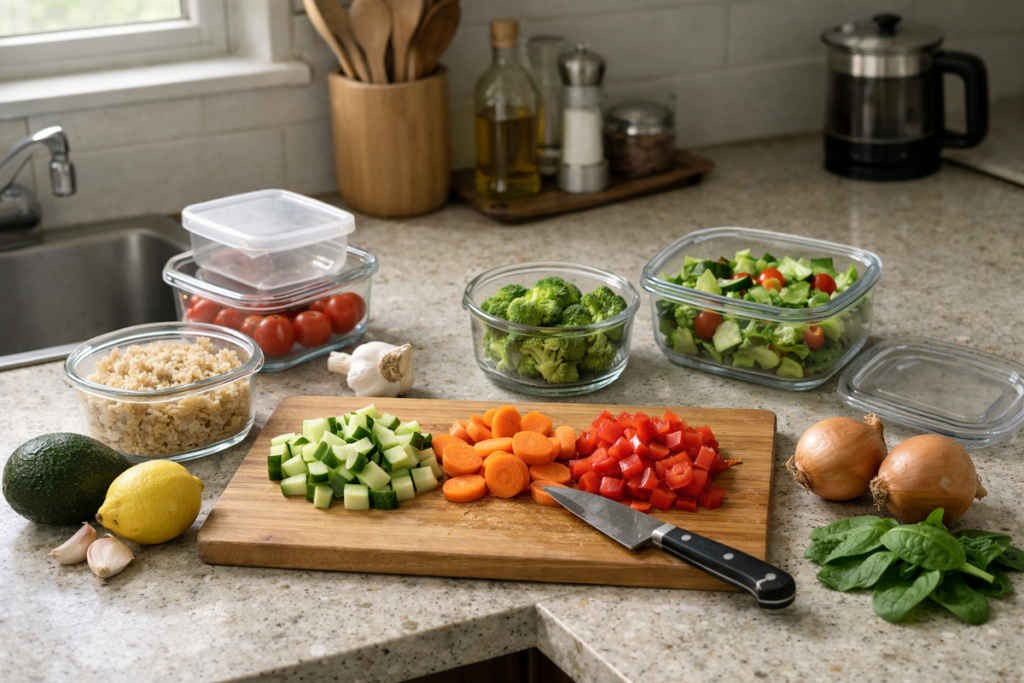
That might mean chopping vegetables ahead of time, cooking one protein to use in multiple meals, or prepping just breakfasts and lunches so dinners feel less stressful.
Meal Prep vs. Cooking Ahead
Meal prep doesn’t always mean fully cooked meals. In fact, many busy households find more success with partial prep rather than complete dishes.
Examples of partial prep include:
-
Washing and cutting produce
-
Cooking grains or proteins in advance
-
Prepping sauces or dressings
-
Assembling ingredients so meals come together faster later
This approach keeps food fresher and gives you flexibility during the week.
Why Traditional Meal Prep Fails for Busy Weeks
A lot of meal prep advice assumes you have unlimited time, energy, and fridge space. That’s rarely the case.
Common reasons meal prep falls apart include:
-
Planning too many meals
-
Choosing recipes that take too long
-
Cooking foods that don’t reheat well
-
Getting bored with repetitive meals
Busy weeks require a different strategy—one that prioritizes speed, adaptability, and realistic portions.
Simple Meal Prep Ideas for Busy Weeks Start with Fewer Decisions
One of the biggest drains during the week isn’t cooking—it’s deciding what to cook. Simple meal prep ideas for busy weeks work best when they reduce decision fatigue.
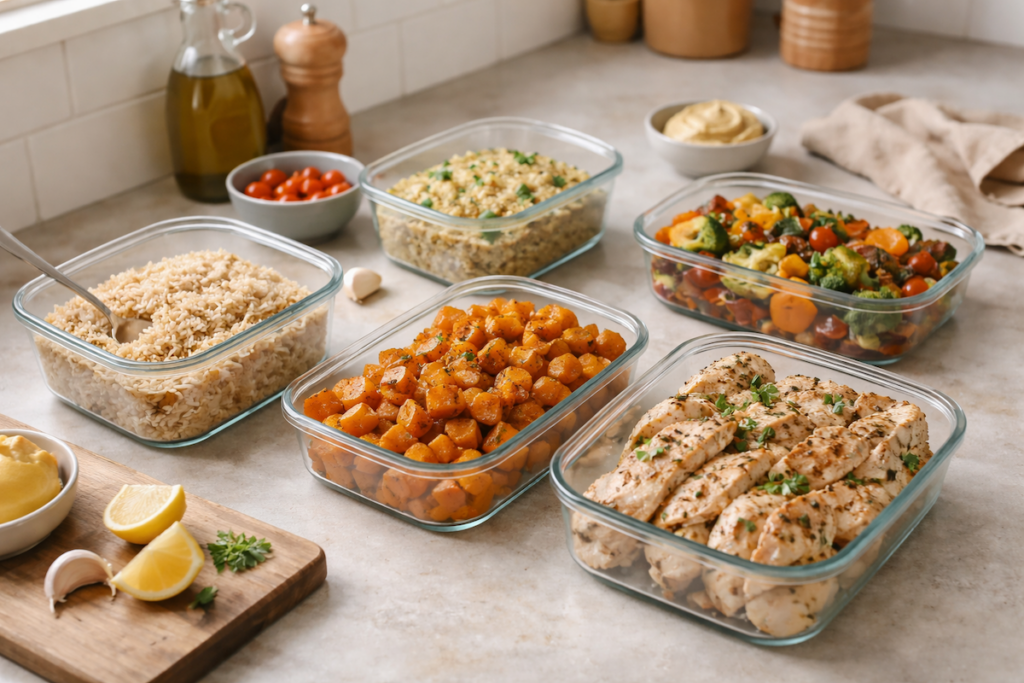
Instead of planning every meal, focus on anchors. These are ingredients or components you know you’ll use multiple times.
Examples of Meal Prep Anchors
-
One protein (chicken, beans, ground meat)
-
One grain (rice, quinoa, pasta)
-
One roasted vegetable
-
One sauce or seasoning blend
With just a few anchors, you can mix and match meals without feeling boxed in.
👉 Internal Link Opportunity: How to eat better without cooking every night
Choosing the Right Level of Prep for Your Schedule
One of the biggest reasons meal prep fails is that it’s treated as a fixed system instead of a flexible tool. Busy weeks don’t all look the same, and the amount of prep you need should change based on what’s coming—not on what worked last week.
Choosing the right level of prep starts with being honest about your schedule, energy, and how much cooking you actually want to do during the week.
Light Prep Weeks: When Flexibility Matters Most
Light prep works best during weeks with social plans, travel, or unpredictable schedules. These are the weeks where over-prepping leads to wasted food and frustration.
During light prep weeks, focus on:
-
Stocking quick proteins and easy sides
-
Washing and chopping vegetables for faster cooking
-
Prepping breakfasts or lunches only
This approach keeps food accessible without committing to full meals that may not get eaten.
Moderate Prep Weeks: The Most Common Scenario
Most weeks fall into this category. There’s a routine, but evenings still feel full. Moderate prep aims to reduce effort without removing flexibility.
A moderate prep week might include:
-
Cooking one or two proteins in advance
-
Preparing a grain or base
-
Prepping a sauce or seasoning blend
This allows you to assemble meals quickly while still cooking fresh elements as needed.
Heavy Prep Weeks: Planning for Low Energy
Heavy prep is most useful during weeks you already know will be demanding—long work hours, travel recovery, or family commitments.
During heavy prep weeks, prioritize:
-
Fully cooked meals that reheat well
-
Freezer-friendly options
-
Minimal daily cooking
This is not the time to experiment with new recipes. Reliability matters more than variety.
Avoiding the Over-Prep Trap
Over-prepping often comes from good intentions but leads to burnout. If your fridge feels overwhelming or meals start going uneaten, it’s a sign your prep level was too high.
Common signs of over-prepping include:
-
Multiple containers that don’t get used
-
Meals that sound good on Sunday but not on Wednesday
-
Feeling pressured to eat something just because it’s prepped
Scaling back is not failure—it’s adjustment.
Under-Prepping Has Consequences Too
On the other end, under-prepping can lead to last-minute decisions that don’t align with your goals.
Signs you may need slightly more prep:
-
Frequent takeout during busy evenings
-
Skipping meals or eating unbalanced snacks
-
Feeling stressed at dinner time
The goal is to prep just enough to support the week—not to eliminate cooking entirely.
Using the Week as Feedback
The most effective meal prep strategies evolve over time. Treat each week as feedback rather than a test you pass or fail.
At the end of the week, ask:
-
What prep helped the most?
-
What didn’t get used?
-
Where did stress still show up?
These answers guide the next week’s approach and make meal prep feel more supportive over time.
The Role of Breakfast in Simple Meal Prep
Breakfast is often overlooked in meal prep conversations, but it’s one of the easiest wins.
A prepped breakfast can:
-
Eliminate rushed mornings
-
Reduce drive-thru stops
-
Set the tone for the day
Simple breakfast prep ideas include:
-
Overnight oats
-
Prepped smoothie ingredients
-
Hard-boiled eggs
-
Yogurt and fruit portions
Because breakfast tends to repeat, it’s a good place to embrace routine.
👉 Internal Link Opportunity: Healthy breakfasts you can prep in minutes
Lunch Prep That Doesn’t Feel Repetitive
Lunch is where many people burn out. Eating the same thing five days in a row sounds efficient, but it’s not always appealing.
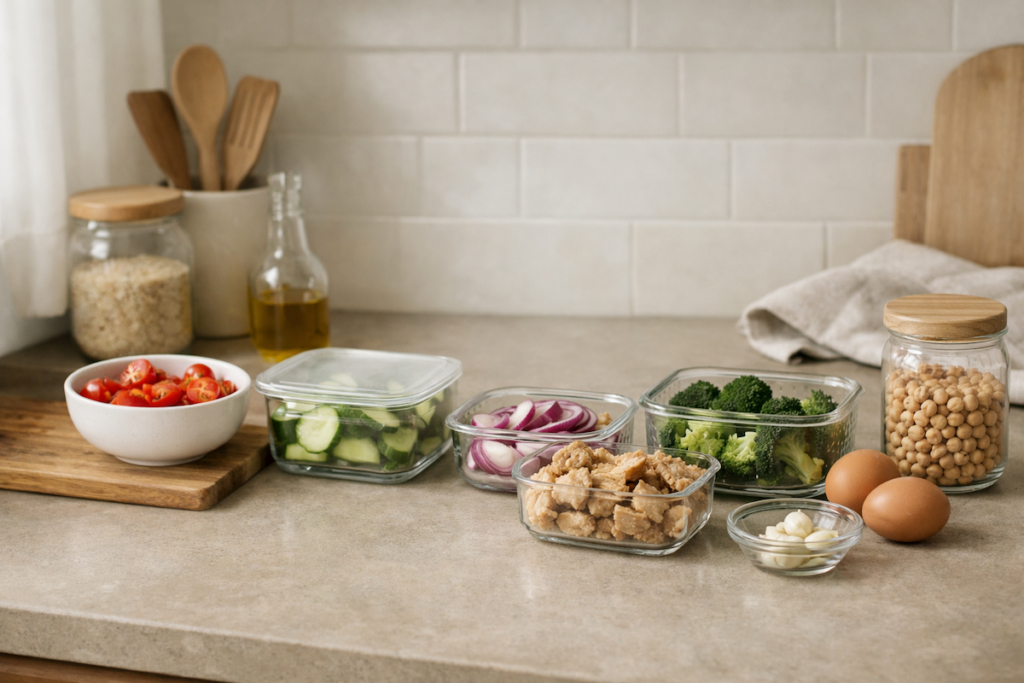
Instead of prepping identical lunches, prep components that can be assembled differently.
Component-Based Lunch Prep
Prep:
-
One protein
-
Two vegetables
-
One base (greens, grain, wrap)
Then rotate:
-
Salads one day
-
Bowls the next
-
Wraps or plates later in the week
This keeps lunches interesting without adding work.
Dinner Prep That Actually Saves Time
Dinner is where most busy weeks fall apart. Even people who prep breakfasts and lunches often get to 5:30 p.m. and realize they still have to figure out dinner. That decision fatigue is what makes takeout tempting, even when food is already in the fridge.
The goal of dinner-focused meal prep isn’t to cook every meal in advance. It’s to shorten the distance between “What’s for dinner?” and actually eating.
Prep Once, Eat Twice (Without Feeling Like Leftovers)
One of the most effective dinner prep strategies is cooking a single protein that can be used in multiple ways. This avoids the feeling of eating the same meal repeatedly while still saving time.
For example:
-
Roast or grill chicken once, then use it for bowls, salads, wraps, or quick skillet meals.
-
Brown ground meat with neutral seasoning so it works in tacos, pasta, or rice bowls.
-
Roast a large pan of vegetables that can be reheated, added to eggs, or used as sides.
The key is keeping the base flavors simple so you can change the final meal with sauces or seasonings later.
Assembly Beats Full Cooking on Weeknights
During busy weeks, full cooking sessions after work are often unrealistic. Assembly-style dinners are far easier to maintain.
Assembly dinners might include:
-
Reheating a pre-cooked protein and pairing it with fresh sides
-
Tossing pre-chopped vegetables onto a sheet pan while something else reheats
-
Combining pre-cooked grains with a sauce and protein
This approach turns dinner into a 10–15 minute task instead of a full production.
What Not to Prep Ahead
Not everything benefits from advance prep. Some foods lose texture or flavor quickly and can actually make dinner less appealing.
Items that often don’t prep well include:
-
Fully assembled salads
-
Pasta mixed with sauce too early
-
Foods meant to be crispy
-
Delicate vegetables that release water over time
Instead, prep components separately and assemble closer to eating.
Using Sauces to Create Variety
Sauces are one of the most overlooked meal prep tools. A single protein can feel completely different depending on how it’s finished.
Simple sauce prep ideas:
-
A vinaigrette for salads and bowls
-
A yogurt-based sauce for wraps or roasted vegetables
-
A store-bought sauce portioned into small containers
This lets you change the flavor profile without cooking something new.
Doubling Recipes with Intention
Doubling a recipe only works if you actually want to eat it again. Instead of doubling everything, be selective.
Good candidates for doubling:
-
Soups and stews
-
Roasted proteins
-
Grains like rice or quinoa
Less ideal candidates:
-
Foods meant to be crispy
-
Dishes with delicate textures
When doubling is intentional, it saves time. When it’s automatic, it often leads to waste.
👉 Internal Link Opportunity: Kitchen tools that make weeknight cooking easier
Meal Prep Containers: What Actually Matters
You don’t need a drawer full of containers to meal prep effectively. But the right containers do make a difference.
What to Look For
-
Stackable design
-
Leak-resistant lids
-
Sizes that match how you eat
-
Microwave and dishwasher safe
Having a few reliable containers is better than owning dozens that don’t fit your routine.
Comparison Table: Types of Meal Prep Approaches
Different approaches work better for different households. This table compares common meal prep styles based on practical factors.
| Approach | Time Investment | Flexibility | Best For |
|---|---|---|---|
| Full Meal Prep | High upfront | Low | Very busy weeks |
| Partial Prep | Moderate | High | Variable schedules |
| Ingredient Prep | Low | Very high | Families, picky eaters |
| No-Prep + Plan | Minimal | Moderate | Light cooking weeks |
Before choosing a method, think about how much flexibility you need during the week.
Managing Food Freshness and Waste
One of the biggest concerns with meal prep is food waste. Prepping too much too early can lead to soggy vegetables or unused meals.
To avoid waste:
-
Prep delicate foods later in the week
-
Store sauces separately
-
Use airtight containers
-
Be realistic about portions
Simple meal prep ideas for busy weeks work best when they respect how food actually holds up over time.
Freezer-Friendly Prep for Extra Busy Weeks
The freezer is an underused tool in meal prep. Even small freezer habits can make future weeks easier.
Good freezer options include:
-
Soups and stews
-
Cooked grains
-
Pre-cooked proteins
-
Sauces
Freezer prep doesn’t need to be all-or-nothing. Even freezing one meal can help on a tough night.
Balancing Convenience Foods with Prep
Not every meal needs to be homemade from scratch. Convenience foods can support meal prep when used intentionally.
Examples include:
-
Rotisserie chicken
-
Frozen vegetables
-
Pre-cooked grains
-
Jarred sauces
Using these doesn’t mean you’re cutting corners—it means you’re prioritizing sustainability.
Simple Meal Prep Ideas for Busy Families
When people search for simple meal prep ideas for busy weeks, they’re not looking for elaborate plans or perfect systems. They’re looking for ways to make eating at home easier when time, energy, and attention are limited.
The most effective meal prep strategies share one thing in common: they reduce effort later, not just during prep time. Instead of prepping everything, they focus on the parts of cooking that cause the most friction during the week.
Below are meal prep ideas that consistently work in real households—not because they’re impressive, but because they’re sustainable.
Prep Ingredients, Not Meals
One of the simplest shifts you can make is moving away from fully assembled meals and toward ingredient prep. This gives you flexibility while still saving time.
Examples include:
-
Washing and chopping vegetables so they’re ready to cook
-
Cooking a batch of grains to use throughout the week
-
Preparing proteins that can be seasoned or finished differently later
Ingredient prep makes it easier to adjust meals based on appetite, schedule changes, or unexpected plans.
Plan for Reuse, Not Repetition
Meal prep often fails when it feels repetitive. Instead of planning five identical meals, plan for reuse.
For example:
-
One roasted chicken can become bowls, wraps, or salads
-
Cooked rice can be used for stir-fries, burrito bowls, or simple sides
-
Roasted vegetables can be served hot one night and cold the next
This approach keeps food interesting without increasing prep time.
Use Time-Based Prep, Not Recipe-Based Prep
Rather than committing to specific recipes, try setting a time limit for prep.
For example:
-
“I’ll prep for 45 minutes”
-
“I’ll cook one protein and one vegetable”
-
“I’ll prep lunches only”
This keeps meal prep from taking over your day and makes it easier to stay consistent week to week.
Match Prep Effort to the Week Ahead
Not every week needs the same level of prep. One of the most practical meal prep ideas for busy weeks is adjusting effort based on what’s coming.
Ask yourself:
-
How many nights will we actually eat at home?
-
Which days will be the most hectic?
-
When will energy be lowest?
Then prep only for those moments. This prevents over-prepping and reduces food waste.
Keep a Short List of Reliable Prep Foods
Decision fatigue is real. Having a short list of foods you know prep well makes planning easier.
Reliable options often include:
-
Roasted vegetables
-
Cooked chicken or beans
-
Rice, quinoa, or pasta
-
Hard-boiled eggs
These foods store well, reheat predictably, and work across multiple meals.
Prep for Convenience, Not Perfection
Meal prep doesn’t have to look neat or uniform to be effective. A container of chopped vegetables or cooked protein might not feel “finished,” but it removes barriers during the week.
If prep:
-
Saves time
-
Reduces stress
-
Makes it easier to eat at home
Then it’s working—even if it doesn’t look polished.
Let Convenience Foods Do Some of the Work
Simple meal prep ideas for busy weeks often include strategic shortcuts. Using convenience foods intentionally can make prep more manageable without sacrificing quality.
Helpful shortcuts include:
-
Rotisserie chicken
-
Frozen vegetables
-
Pre-washed greens
-
Store-bought sauces
These tools exist to support busy schedules, not replace cooking entirely.
Build in Flex Days
One overlooked aspect of meal prep is allowing for flexibility. Planning one or two “flex” meals gives you breathing room.
Flex meals might include:
-
Leftovers
-
Breakfast-for-dinner
-
Freezer meals
-
Simple sandwiches or salads
This prevents meal prep from feeling rigid and reduces pressure during the week.
👉 Internal Link Opportunity: Easy weeknight meals for families
How Much Meal Prep Is Enough?
One of the biggest mindset shifts is realizing you don’t have to prep everything.
If meal prep:
-
Reduces stress
-
Saves time
-
Helps you eat better
Then it’s doing its job—even if it’s minimal.
Over-prepping often leads to burnout. Under-prepping can still be helpful.
Affiliate Disclosure
Some meal prep posts may reference kitchen tools, containers, or appliances that support everyday cooking routines. If you choose to purchase through recommended links, the site may earn a small commission at no additional cost to you. All recommendations are made with practical, real-world use in mind.
Adapting Meal Prep Over Time
What works now may not work forever. Schedules change, seasons shift, and energy levels fluctuate.
Revisit your approach regularly and adjust:
-
Prep less during busy social seasons
-
Prep more during high-demand weeks
-
Change meals with the weather
Meal prep is a tool, not a rule.
Conclusion: Simple Meal Prep Ideas for Busy Weeks Are About Support
The goal of simple meal prep ideas for busy weeks isn’t to create a perfect system. It’s to support your life as it is right now.
When meal prep feels helpful, you’ll keep doing it. When it feels overwhelming, it’s time to simplify.
Start small. Prep what matters most. Let the rest go. Over time, those small choices can make busy weeks feel far more manageable—without turning food into another source of stress.